Russell Davies

As disappointed as you are
About | Feed | Archive | Findings | This blog by email

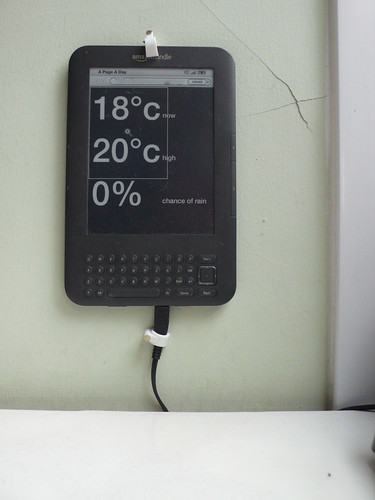
information not radiator

L1170396

Quite pleased with this. It's been working for weeks now. There's definitely a different quality to the quietness and non-radiance of the kindle-as-dashboard. 
October 10, 2013 | Permalink | TrackBack (0)

activities not audiences

As I've wondered further from the world of agencies and marketing departments and entered the real world, it's been surprising to me how much 'marketing thinking' has come to dominate the way large organisations look at the world.

It's sad. That bag of assumptions - brand, audiences, messages etc - has become corporate orthodoxy just as the point it becomes least useful. 

It's doubly unfortunate because that mindset is often conflated with 'doing digital'. Digital/social/web was often integrated into large organisations as a subset of comms - so it comes loaded with that marketing approach. This was understandable when it seemed like the web was just another media channel for your business, now, when it's obvious that the web should be the entire platform for your business, it's less forgivable.

That's why, when I got to GDS I found the obsession with user needs so refreshing and helpful - not just users, but user needs. That's a big important distinction. One that sometimes gets lost in a warm bath of user-centricness.

If we forget the needs bit then we're just talking about users, which easily elides into audiences, which everyone takes to mean target audiences - which is a whole different kettle of ball games.

An 'audience' is an organisational convenience from a broadcast age. It's a reasonable way of segmenting the world so you can buy media but as a way of actually talking to people it doesn't work. Most good advertising gets round it the same way good art does - by using the specific to illuminate the general, but most advertising isn't good. So you end up with crude panderings like appealing to women by making all men seem like feckless idiots. Or by saying everyone born in a particular decade has a particular way of looking at the world.

People, markets, customer bases, aren't this simple. Mothers are also small business owners, students and firefighters. Segmenting your users into audiences is always reductionist and rarely helpful. Resisting the obvious segmentations gets you briliant thinking like this.

The whole point of 'digital', the very opportunity of it, is that you don't have to segment people like this. They segement themselves by looking for the thing they want to do. 

If your primary focus is on user needs then your task is simple - work out the specific thing people are trying to do and then make it as simple and quick for them as possible. Your design, your engineering, your research, your testing are all then focused on making that one thing work.

It becomes very easy to define success and failure, it's easy to iterate and improve and your research and testing goals are clear. You talk to and work with users in order to help them do something. You only need to understand 'who they are' in as much as it provides a context and background to help them do things.

Then, of course, you quickly get to the point where you're serving multiple needs. You'll start to see common needs and patterns, people who do A also seem to want to do B, so you can help them find B easily when they've finished A, you can group those things together.

But, crucially, you're doing it based on the things people actually do rather than your assumptions about how the world should be divided. You just aggregate activities that are commonly performed together.

You can call that a portal if you want (though PLEASE DON'T) but portals are really something else - they're an attempt to deliver marketing messages by aggregating audiences. They're an attempt to graft a broadcast mindset onto a non-broadcast medium. That graft is not taking.

As more organisations realise that the key to long-lasting, commercially pleasant relationships is great digital service delivery - not message delivery - you can expect audience thinking to diminish and activity thinking to increase. 


October 09, 2013 | Permalink | TrackBack (0)

starting to find iOS 7 a little familiar

Thanks IOS7. Let's get through today first, eh?

October 08, 2013 | Permalink | TrackBack (0)

ah yes

Untitled

He also invented a fantastic coffee machine.

October 07, 2013 | Permalink | TrackBack (0)

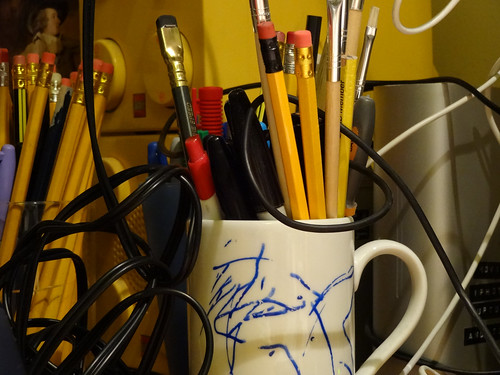
pencils and cables

DSC00003

October 06, 2013 | Permalink | TrackBack (0)

dialectic

IMG_0847

October 05, 2013 | Permalink | TrackBack (0)

the web, the web, the web

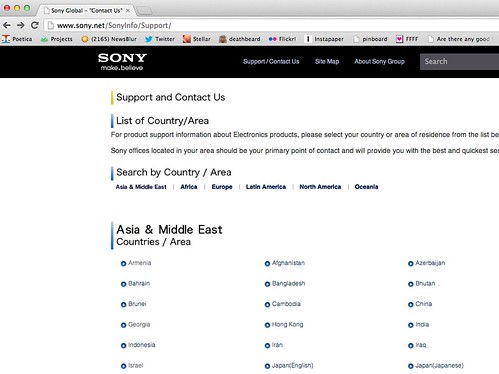
Well, people love a complainy post don't they? That one about the Sony web fail was popular.

But I want to make a point, lest I'm misunderstood.

I'm Not Saying: the website is broken therefore the company must have stupid web people.

I Am Saying: the website is broken therefore the company must have stupid leadership.

I Am Further Saying: I bet the web people are brilliant and are struggling to cope with an organisation that thinks the web is for marketing and aftersales rather then realising that the web is the platform on which they should build their whole business.

I Am Further Acknowledging Again That This Is Hard: It's hard because you have thousands of skus and legacy systems tied into horrible service contracts in competing regions, divisions and cultures. Fair enough. That's what you have to solve. That's why it's not a technology problem.

If you have so many products that you can't build a website that can easily surface them - then you have too many products.

If you have a corporate structure that means customers can't find the stuff they want - then you have the wrong corporate structure.


October 04, 2013 | Permalink | TrackBack (0)

favourite shop

IMG_0926

Christine's has been around for a while. Since 1954 according to the sign. This is how they reacted to the arrival of a Tesco express across the road.

October 03, 2013 | Permalink | TrackBack (0)

death to innovation

I bought a new Sony thing yesterday. We don't need to talk about that right now, we'll get to it later.

It came with one of those very thick booklets with very few instructions in many languages:
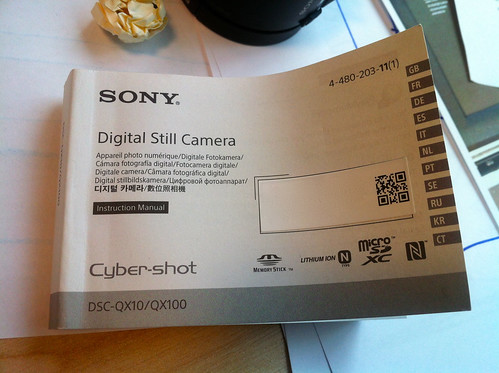
booklet

So, as soon as I wanted to know more than how to turn it on and safely dispose of the battery I realised I needed the help guide, available at this handy URL (and QR code?):
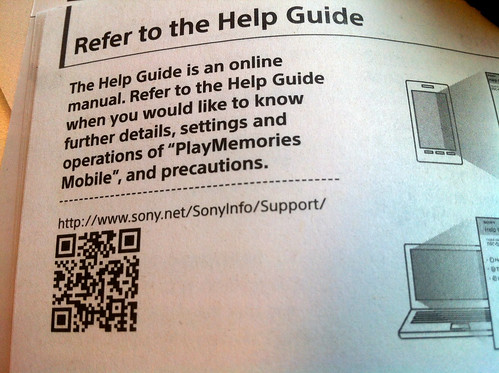
URL

That URL takes you here:

start

Fair enough, you think, it's a big company, global site, hard to be specific for every single product. You click on Europe and end up here:
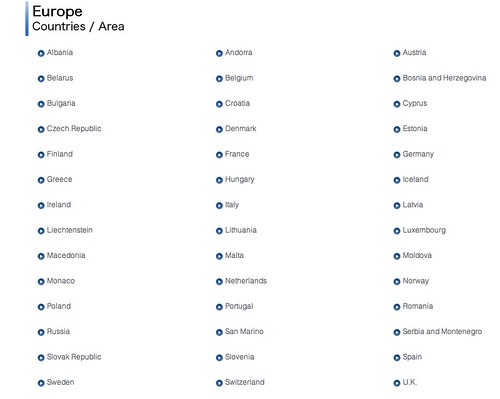
UK

You're getting closer, you click on UK and end up here:
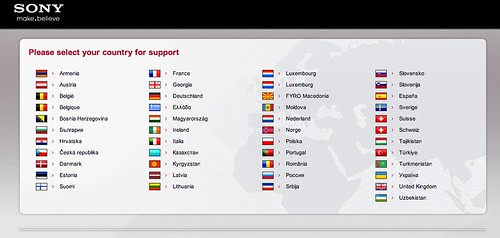
Screen Shot 2013-10-02 at 14.28.13

You're back in Europe! But with flags! Never mind, you click on UK again:
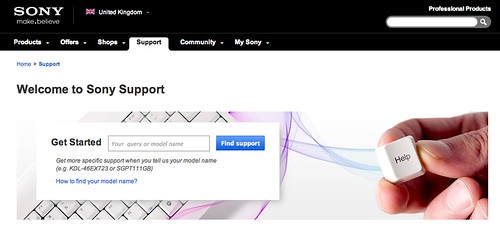
support

Right, good, now we're getting somewhere. You type in the number of your thing:
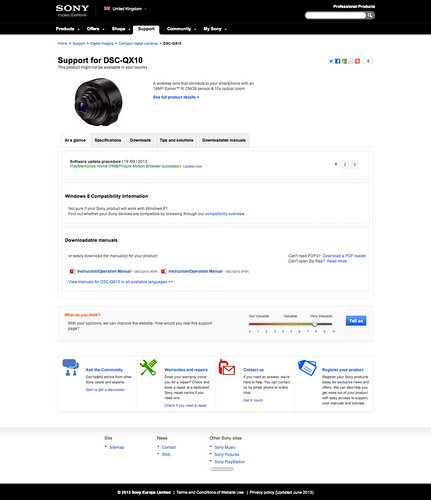
 

Sony DSCQX10 technical support

You hunt around a bit and click on one of the identically named  Instruction/Operation Manual links. It's a 2-page PDF that tells you how to fit the strap. You click on the other one. It's this:
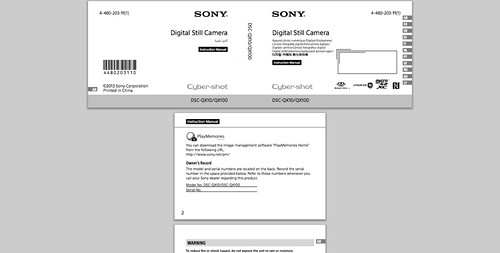
download.sony-europe.com:pub:manuals:consumer

It's a PDF copy of the very same thick booklet that gave you the URL that started this whole journey.

There is no Help Guide.

Googling only gets you to the same place via various international portals and one of those long marketing pages that looks like you care about tablets.

There is no Help Guide.

My point

Agencies and marketing departments are still banging on about innovation. Sony are probably demanding innovative and compelling digital communications solutions from their staff, partners and agencies.

They should stop all that and fix their broken website.

I know it's hard, I know they have many products and regional overlaps and national feifdoms and complicated CMSs and whatnot. They'll need to reorganise and reskill and reprioritise. They could call that innovation if they want, but it's not, it's competence. It's the basics.

Take the money from marketing and spend it on that.
October 02, 2013 | Permalink | TrackBack (0)

feels like the summer's finally over

inspecting the harvest

throwing stones

northumberland sunset

inspecting the harvest

"the james"

October 01, 2013 | Permalink | TrackBack (0)

« Previous | Next »