I went to Oslo last week to talk at a thing and do a workshop with the Interaction Design students at the AHO Institute of Design. It was the most interesting few days I've had in ages.
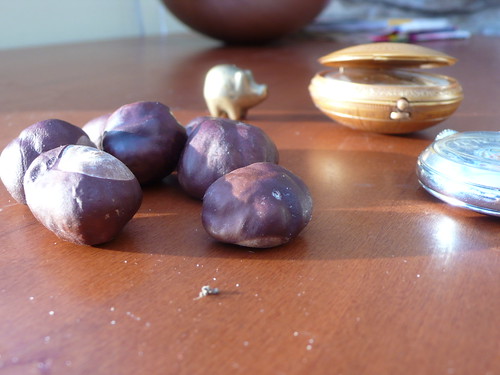
They asked me to think of a brief for the workshop before I went and knowing nothing about Interaction Design I thought the best thing was to fall back on my personal obsessions. I figured then, at least if the task was horribly obvious I could at least be enthusiastic about it. So I started off by talking about the little objects we carry around with us, things at the scale of marbles, conkers and jewelery. These seem to be a significant and fascinating part of our material culture but I can't think of a lot of successful technology products that work at that scale or fit into our lives that way. In our pockets and bags as mementos, trophies, souvenirs.
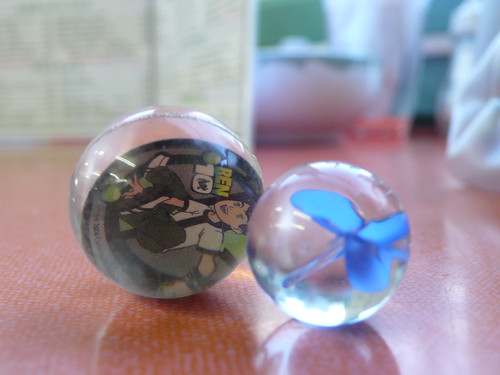
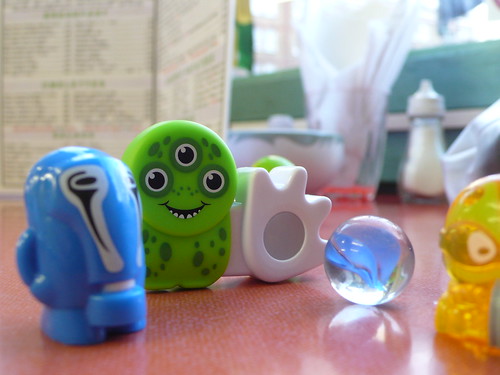
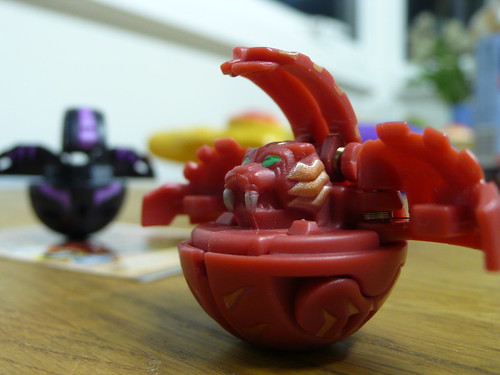
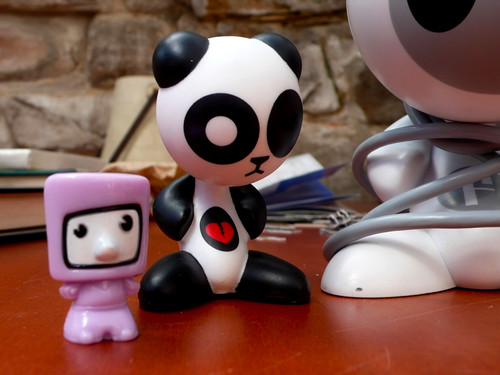
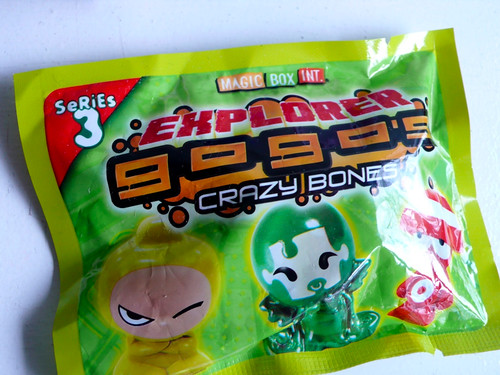
I showed them some of the examples Arthur and I have collected. Toys, objects, little tech things. (I'm especially fascinated by gogos.)
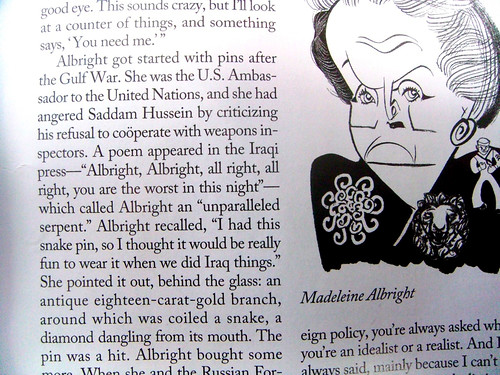
And I talked about an article in the New Yorker about Madeline Albright and her pins (badges/broaches). This seemed a great example of the way we use these little objects to say stuff about ourselves. And, in saying those things, to understand ourselves.
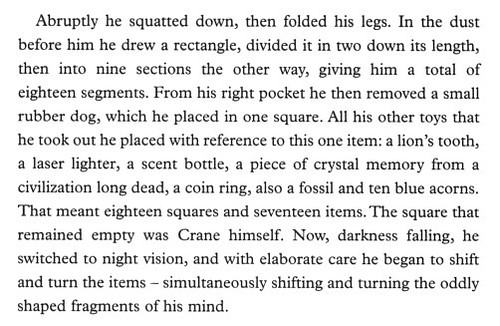
And I pointed at a brilliant character that crops up in a couple of Neal Asher's books; Mr Crane. (The extract above is from Brass Man) He's a mostly-insane, murderous android who collects small objects like toys and broken gadgets on his travels. In quiet moments he arranges these things in a grid in front of him and uses them for thinking with. This also seems like a thing lots of us do. We play with things, fidget with them, think with them.
(And, if I was doing this brief next week, instead of last week, I'd definitely have pointed them to this post of Anne's about our relationships with objects.)
I also talked about bubblino, the splendid tower bridge papercraft visualisation, and these great dopplr luggage tags.
So, after all that pre-amble, not really knowing what an Interaction Design brief might look like, I asked them to do this:
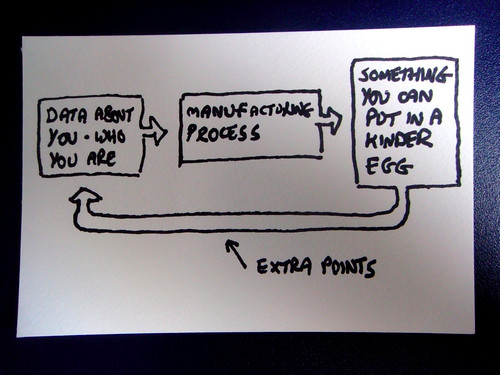
(The Kinder Egg bit wasn't about a business idea, it was to get at scale, and levels of frivolity versus seriousness.)
I'm sure it's in the top ten list of most cliched design briefs ever, but I was keen to see what they'd do. And they did some lovely stuff. They only had about a day. We asked them to do more than sketches, to actually prototype something. And they came up with some really nice thoughts. There was a system for making jewelery that varied according to the content of your SMS messages, and a 'soft medal' system that attached to the laces on your football boots and a dead simple social software bracelet that someone should definitely make.
But two of the projects really stuck with me, for different reasons.

The first was a very simple thing; Svein Inge Bjørkhaug proposed something a bit like a physical RescueTime. Your usage of various different applications on your computer is monitored and every week you get sent blocks representing the different programmes you use. More hours use = a bigger block. The idea was that you'd arrange these things around your desk in whatever pattern suited you and I guess in the first week or so it would be an amusing novelty.

But I really liked how confronting it would prove to be over time. After a few months your workspace would be full of these bricks, every one of them representing time spent gazing at a screen. The hours spent in your browser or PowerPoint are easily forgotten, no trace of them normally remains, but once they're made flesh in brightly coloured blocks they become annoyingly hard to get rid of. I think that would really make you think harder about how you spent your time. This also demonstrated the power of prototyping. I wouldn't have got this feeling at all from sketches or description, it only happens when you see the stuff in front of you. I can't believe this is the first time someone's done something like this, but I still liked it. Still do.
The second thing was brilliant in exactly the same way that bubblino is brilliant. It was a very silly and perfectly appropriate physicalisation of the character of a social network. It was a Mechanical Facebook badge, done by Martin Spence.


I'm not sure it needs a lot of explaining does it? Turn one wheel to update your status, turn another to update your picture. Wear it as a badge. Genius. Shown above is the first version, there was a second, smaller, more practical version with stickers and things but in losing the silliness it lost lots of the charm. This makes you think about your relationship with Facebook, about what you want to share in the real world versus on the web, and how most of us have a very limited universe of status updates.
And, er, that's it really. I don't have any shattering insights to offer, just wanted to blog about this because I said I would, and because it's proved to me that materialising and dematerialising the web is still a hugely potent and interesting thing to be thinking about.
And to say huge thanks to Mosse and Jørn for inviting me, and to them and Einar for looking after me while I was there. If they ask you to go and do a workshop, go.
(Workshop pictures by Jørn, more here)