Russell Davies

As disappointed as you are
About | Feed | Archive | Findings | This blog by email

streetview and collective remembering

3367829890_5cb04d28b6_o

This is the top of the street I grew up on. As captured last summer by Google Street View. So it's already redolent with nostalgia for the golden age when Woolworth's was still going.

As soon as Street View arrived I found myself virtually driving to the top of our street to the place where the trig point used to be, put up when the estate was being built and taken down probably 30 years ago. It was  a big concrete thing, and it was where we used to play when we were kids. (Position of the trig point shown by orange lines.)

I'm certainly not the first to realise or write about this effect but doing this really struck home how powerful things like Street View and geo-tagged Flickr will be as remembering tools. Not just remembering things you've got pictures of, but the things implied and stirred by the pictures. So they're not just tools for locating yourself or your objects, but for locating your memories and exchanging them with others. Because I bet someone's got a picture of this trig point somewhere and sooner or later they'll geotag it, upload it, layer it on some other service and I'll see it somehow and it'll make me cry. Because I'm getting to that sentimental age.  

March 19, 2009 | Permalink | TrackBack (0)

newspapers and all that

L1090465

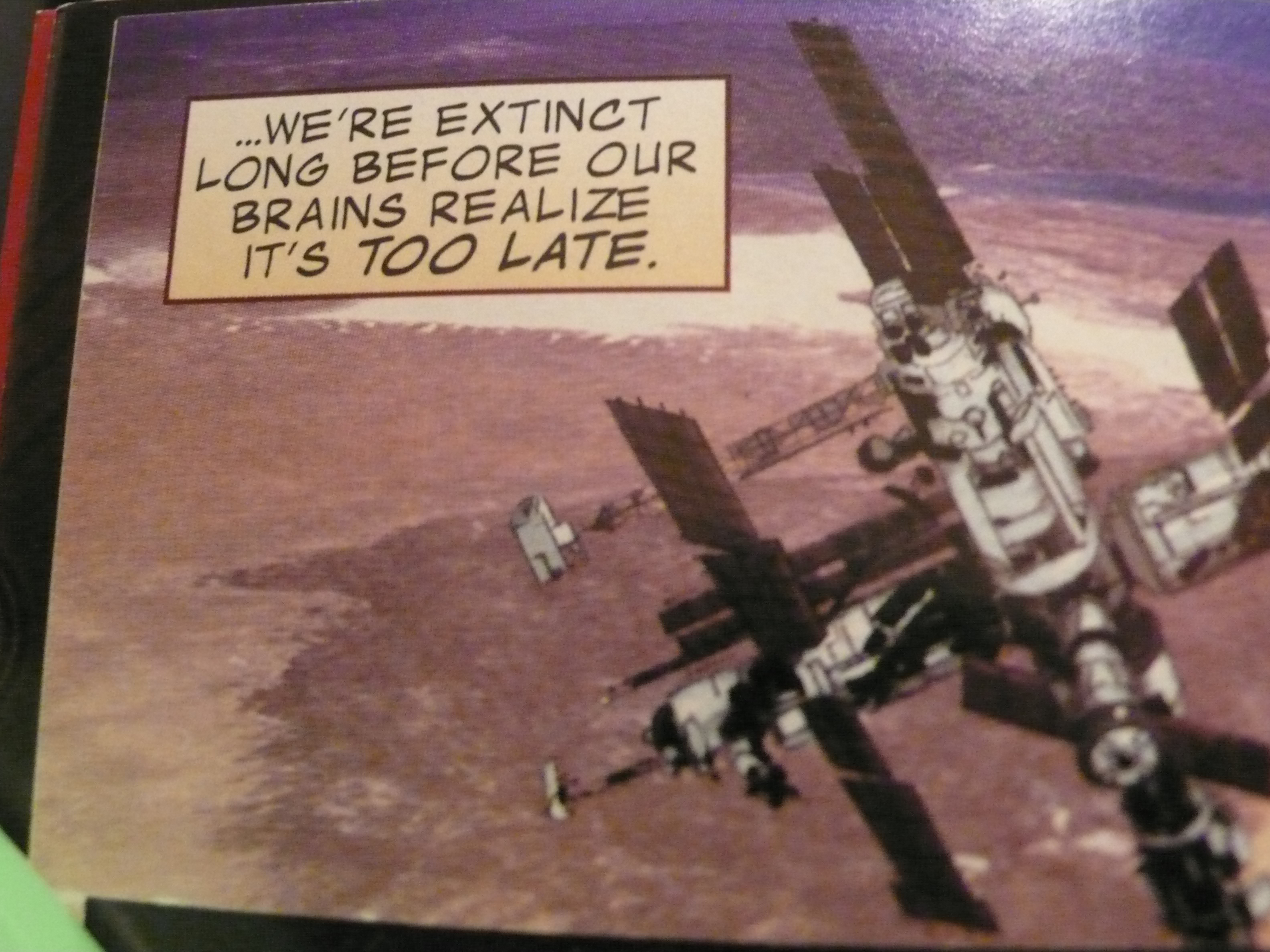
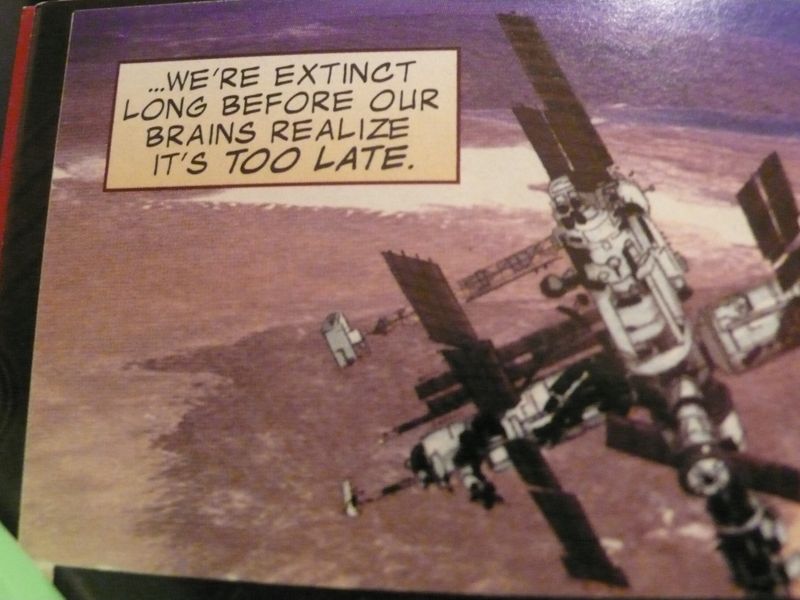
There've been two great pieces about news and newspapers this week. This one from Steven Johnson (which I wrote about in this week's Campaign) and this one from Clay Shirky (which I think I'll write about in next week's Campaign and which is neatly summarised by the above frame from Matt Fraction's Iron Man.)

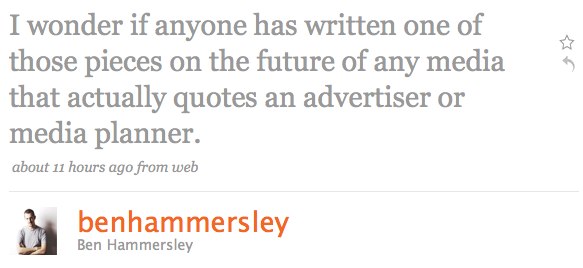
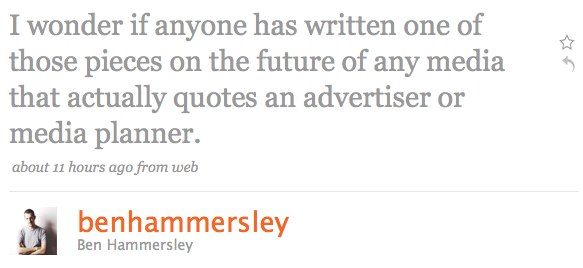
And then Ben Hammersley twittered this:
Twitter _ Ben Hammersley_ I wonder if anyone has wri ...

And I wondered why we'd not heard the voice of advertisers or media planners much in this debate. It could, of course, be that I'm reading the wrong stuff, but I don't think anyone from these worlds has bubbled up noticeably in the opinionsphere. And I wondered why not, and why no one has asked them and what they might say about these things. I'm not an advertiser or a media planner / buyer so I'm guessing here. But I talk to quite a few so they're not wholly random guesses. (Also, I think I might properly ask some of them these questions and report back. Just like a real journalist.)

In the meantime, these rambling things occur to me:

Advertisers and agencies don’t depend on a single medium. They’re multimedia beasts. Most could very adequately cope without newspapers. They could probably ‘buy round’ the death of any single media channel. So they’re not so concerned about the possible death of a particular industry, they’re certainly less concerned than the people in that industry and those adjacent to it (who tend to do most of the opinionating.) So they opine about it less because they care about it less. Not that media channels like these ever die anyway. They fade but they don't disappear.

All this turmoil is creating tremendous short-term advertising value. And advertisers are always looking for that. Media agencies are particularly attuned to exploiting that value. Little bits of revolution, proliferation or destabilisation always create opportunity for the canny buyer to find some good deals. Newspapers are in trouble? Probably means there are some deals to be had. Telly’s cheap, so it’s worth piling in. Over the next ten/twenty years advertising buyers will make tremendous amounts of hay trading one channel and one supplier against another as new equilibriums (equilibiria?) are established. Historically advertisers have tended to get good value out of media revolutions. It’s when everything’s solid, locked-down and established that supply gets too well managed and rates go up.

And while everyone’s making the most of this short-term value the smart advertisers are making plans to bypass the whole thing anyway. They don’t really enjoy giving money to media owners even when they’re getting great deals. So they’re increasingly creating their own, direct communication channels. Most of them will never wholly replace paid-for media, but they'll replace quite a chunk.

And, of course, advertisers don’t really buy media, they buy audiences. And the audiences aren’t going anywhere. Individual news organisations might disappear, maybe many of them will, but the news audience will remain. And they’ll be supplied with news by someone. And unless we see a sudden proliferation of BBC-like organisations then they’re likely to be ad-supported in some way. So why should advertisers worry? Particularly, as we’ve discussed, they’ll probably be able to get good rates out of the confusion. As Mr Shirky says, we’re living through a revolution and the old stuff is likely to break before the new stuff arrives. But, in the meantime, we’re likely to see a proliferation of places to advertise, not a diminution.

And it can't be ignored that many advertisers and media agencies are going through their own version of the revolution that's afflicting newspapers. And many of them are doing exactly what Mr Shirkey describes here: "Leadership becomes faith-based, while employees who have the temerity to suggest that what seems to be happening is in fact happening are herded into Innovation Departments, where they can be ignored en masse."  Most media agencies are too busy worrying about their own profitability/survival to be worrying about newspapers.

So this might seem a bit, well, hard-hearted and ungrateful to the newspaper business. Don't advertisers care about our marvellous product and our century-long relationships? Don't they have some obligation to support us in our of need? Well, no, they don't care a lot. Partly for hard-headed commercial reasons, as discused above. Partly, I suspect, because newspaper culture has always been the most studied in its contempt for the businesses that buy the ads* and that doesn't make them popular. Particularly in the US, that resolute wall between adsales and journalism has become so entrenched in the culture that many journalists are horrified when it's suggested that they should think about how their work gets paid for. Fair enough, they don't want to be influenced by commercial taint. And when the newspaper was the only advertising game in town, they could get away with this. But it means that the people who make the product and the people who have to make money from it live in completely different cultures, only ever joined right at the top. And that's going to make it hard to find new revenue models, new relationships with advertisers, a future.

Which reminds me of something at the end of Mr Johnson's piece: But in times like these, when all that is solid is melting into air, as Marx said of another equally turbulent era, it’s important that we try to imagine how we’d like the future to turn out and set our sights on that, and not just struggle to keep the past alive for a few more years.

If we are going to create a new news ecosystem involving advertisers (and a lot of people would be grateful for that money) then we're going to have to do something about that institutional bifurcation between content and commerce.  We're going to have to design the relationship between the two with the care of a good experience designer.

Think about the experience of watching telly right now.

Someone (ie Sony) designs the box. Someone else (say Sky) designs the programme selection interface. Someone else (say the BBC or ITV) designs some of the channels, other people design the others. On each channel the programmes, the idents, the sponsorship bumpers, the trails and, of course, the ads are all designed by different people. And all these different designers have very different aims. Which is why the experience of watching telly is often spoiled when the ads are much louder than the programmes. We've grown used to these messy media experiences, there's something good about them. But this mess of competing requirements in a single experience channel makes it really hard to improve the overall, er, experience. Or to design a better new thing to replace the disappearing old things. This feels like a discipline of the future. Something we'll need to think about in the newly fecund news/media environment. I'm not arguing that editorial should be cowed by commerce. Or that branded content is the future. Or any of that stuff. I don't know what the answer is. No one does. But I bet it'll involve a world where the content people know more about what the commerce people do. And the product they both work on is designed to work well for both of them.

Anyway, I'm running out of steam now and I'm being told to stick the kettle on. So I'll leave it at that.

Good night all. And if you have been, thanks for listening.

*Which is not to say that content people in other ad-funded businesses don't also evince enormous disdain for, well, everyone that's not them. And especially advertisers. Of course they do. It's just that newspaper culture has become particularly holy about it.

March 17, 2009 | Permalink | TrackBack (0)

urquell - unit of urban quietness

2467847954_5fd98ac33e_b

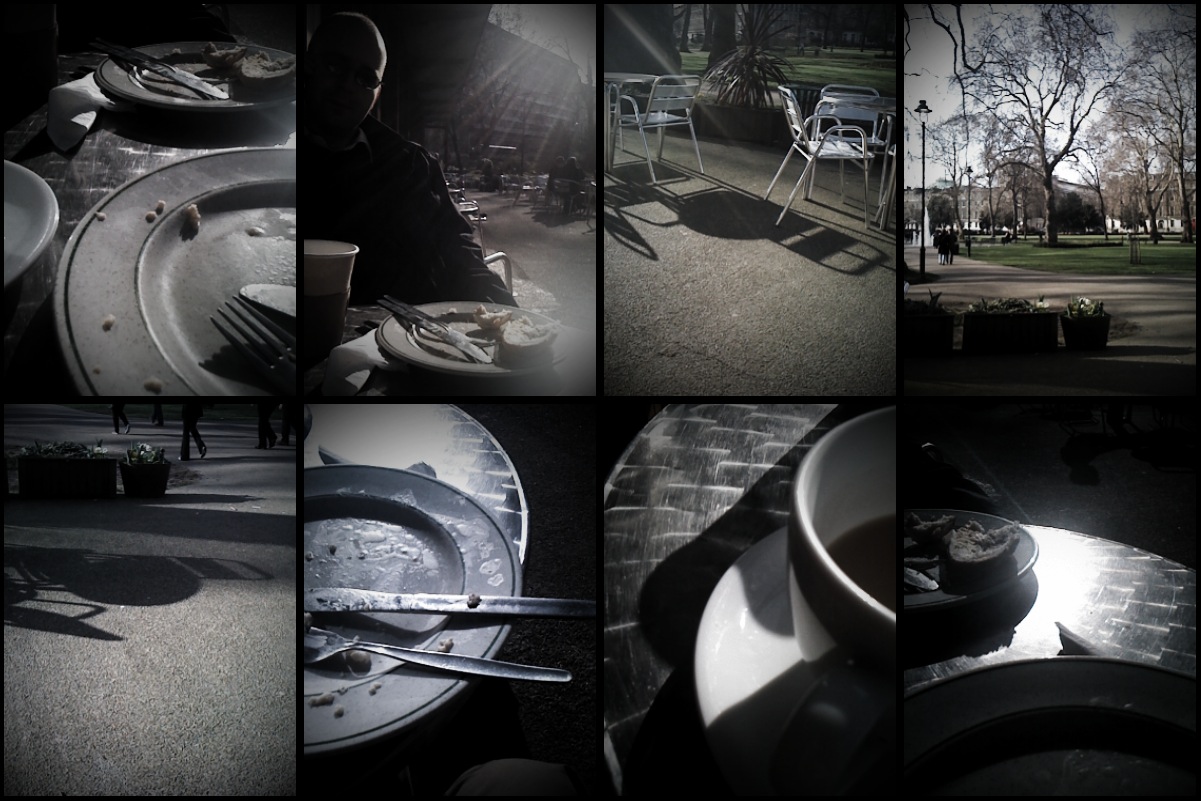
Matt Jones was joking about units of urban resolution on twitter a while back. I didn't really know what he meant. But it popped into my head that there should be a unit of Urban Quietness and it should be the Urquell. I was in Russell Square this morning and I think that rates three Urquells because there's greenery, a fountain and a cafe.

Anyway.

2884720392_4e9ac4ffdc_b

IMG_0299

March 16, 2009 | Permalink | TrackBack (0)

nuthing but a G thang

L1090411

I'm up to to G now in my alphabetical listening. I'm enjoying it. It does seem to be making me pay attention to music I own but haven't listened to that actively before.

In week one I bathed in nostalgia remembering the loveliness of Roddy Frame's Aztec Camera.

Week two was all about Bing and Biosphere. A surprisingly coherent combination.

Week three combined Carbon Based Lifeforms, Cassetteboy and Chas N Dave. But I loved plunging into the world of Chas Smith.

Week four was all about the D Train.

Week five was more nostalgia - for the gentle times before Everything But The Girl discovered dancing.

And in week six I discovered that Fats Waller was perfect, perfect working music. Forget all that ambient stuff you usually use as a concentration aid. Get Fats in. The organic bounce, simple tunes, happy mood get you powering through the powerpoint.

And now, just now, I've just finished 8 straight hours of Genesis. Awesome.

Anyway.

March 09, 2009 in Music | Permalink | TrackBack (0)

hacking the book

L1090294

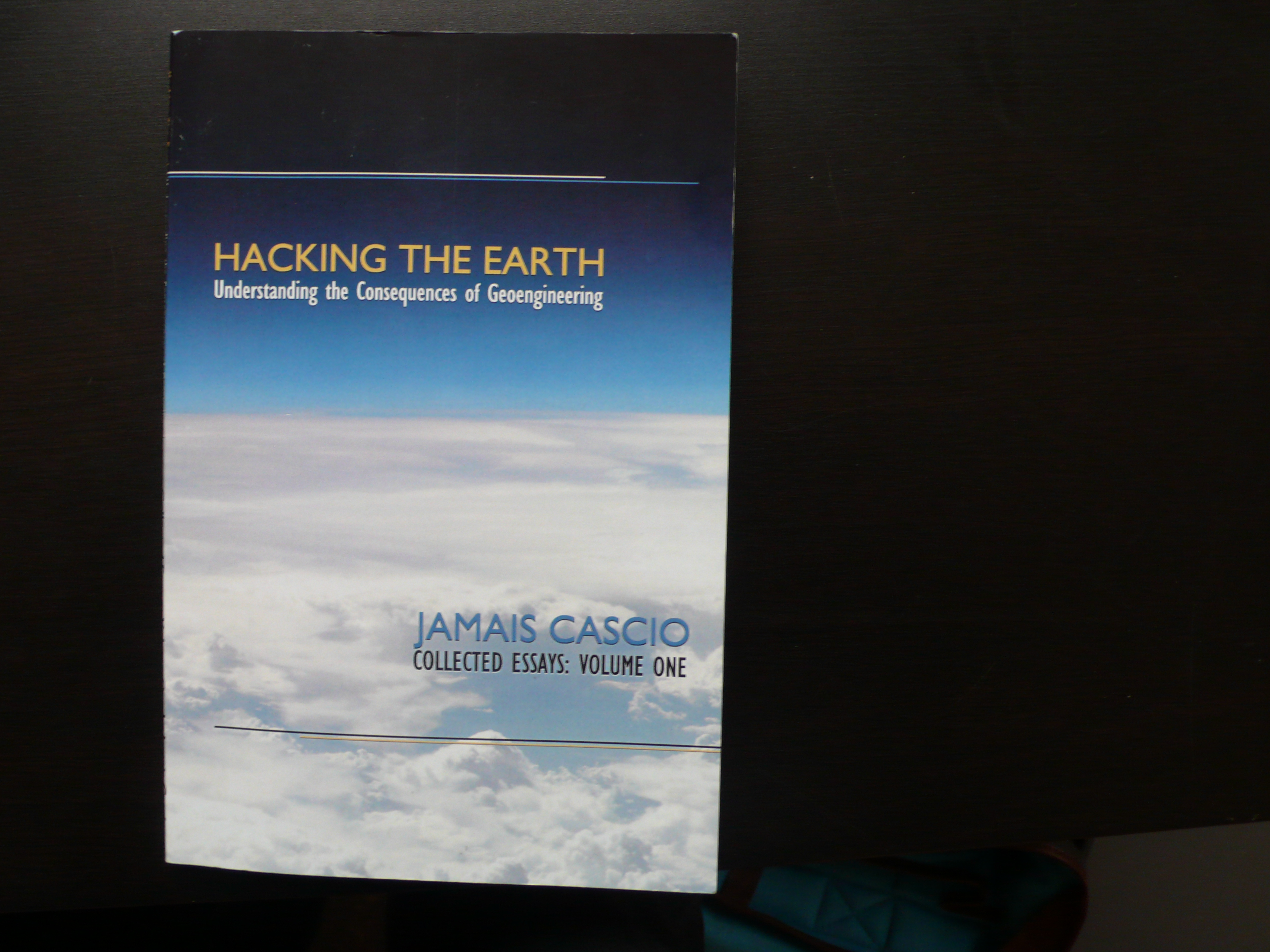
I've been sitting on half a thought for a few weeks, since reading Hacking The Earth, and something Warren Ellis just wrote finished it off for me. And squared it and cubed it.

Hacking The Earth is a fantastic read and got me into the same anti-collapsitarian mood that seems to have seized Jones, but I don't want to talk about the content right now. I want to think about the form. Because, as I was reading it, it felt like a new, distinct, emergent form of thing.

It's mostly a collection of blogposts, which I could have read on the original blog, some of which I did read, some of which I didn't. But, firstly, it's a collection, reading them all together, in the order the author intended, with some commentary and context makes the experience different and better. And the fact that it's nicely printed and has all those nice bookish qualities obviously helps too. (I can scribble on it and dog-ear it.)

But secondly it's more than just a book. It's faster than that. It feels quick, contemporary, more like journalism. There's a piece in here from January 2009. That's very fast for books. That's fast for magazines.

Mr Ellis talks about the ebook/POD model like this:

"The thing that caught my eye about the Unbook was the idea of accepting a book as a version: an evolving beast that spits out periodic iterations of itself before crawling away to mutate some more. And it occurred to me today that that actually ties into the idea of the Battle Weapon — the 12-inch released to test new experiments in music (more commonly known as dubplates these days)."

I think that's the perfect analogy. I can imagine Hacking The Earth being updated, improved, used for testing all the time.

And doesn't that make you feel better about that book you were going to make with Lulu? It's not a vanity project, it's a battle weapon.

March 04, 2009 | Permalink | TrackBack (0)

lyddle end news

Newstand

Harpoon

Asylum

GM

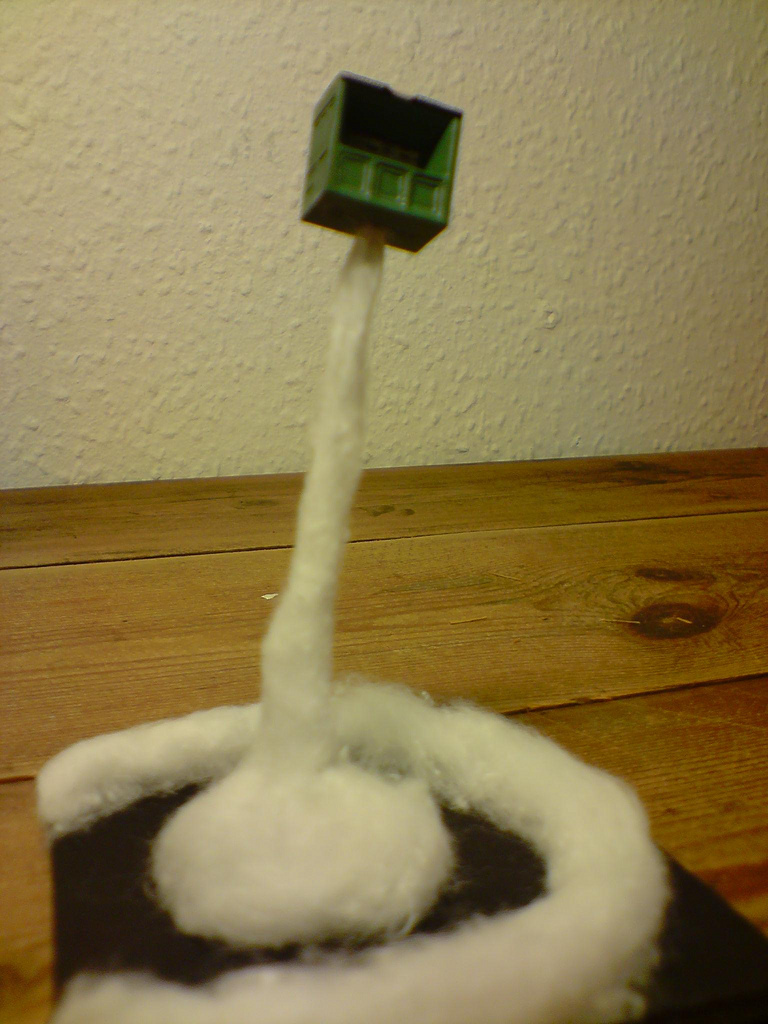
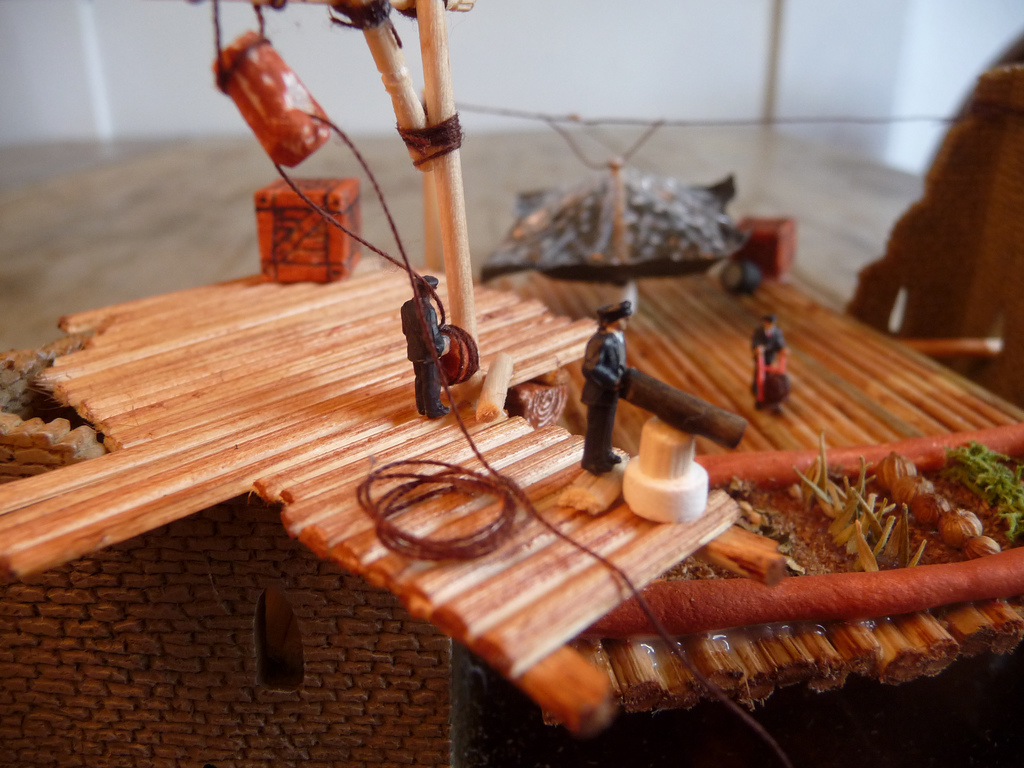
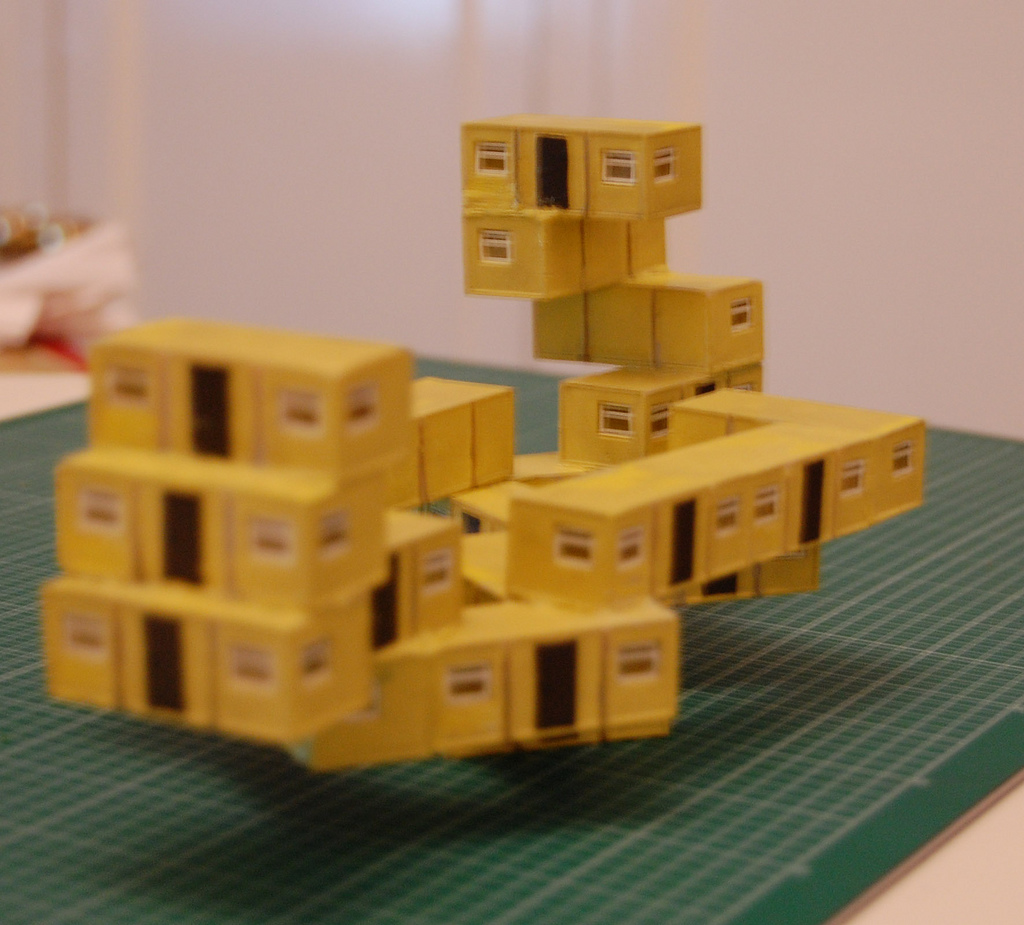
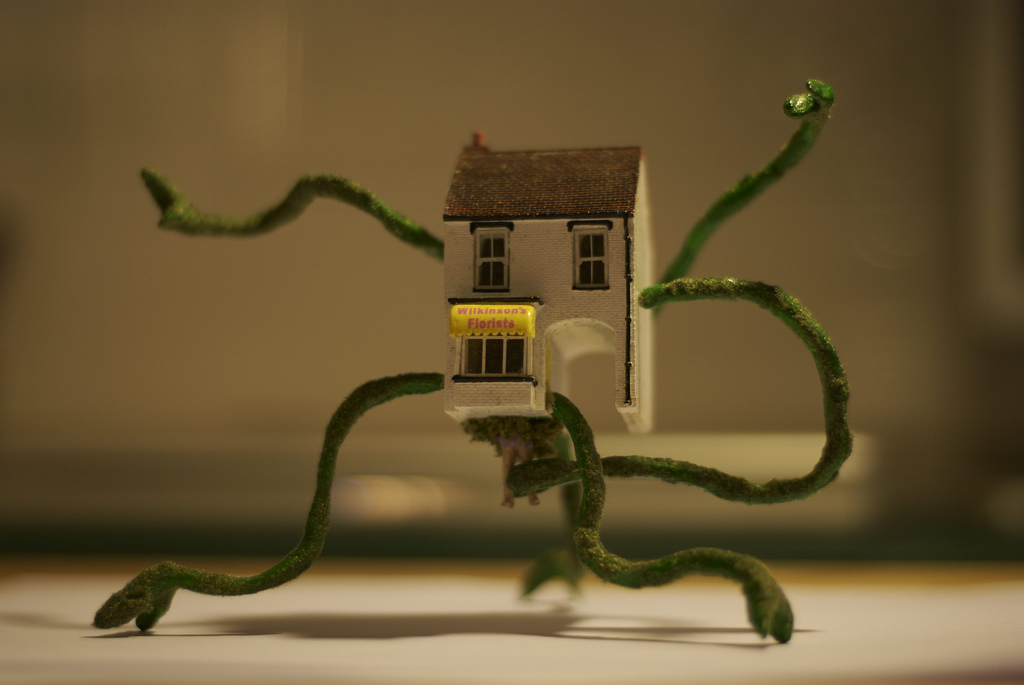
Well, the Lyddle End deadline has officially been and gone, and some extraordinary things have been created. You can see most of the latest stuff here. But, there are people who still aren't done (including me) so we're going to extend the deadline to the end of March. Ah, now, that's better.

March 03, 2009 | Permalink | TrackBack (0)

the fourth england?

Thirdengland

A documentary on BBC4 the other day reminded me of a favourite bit of JB Priestly - his idea of the Three Englands:

"There was first, Old England, the country of the cathedrals and minsters and manor houses and inns, of parson and Squire; guide-book and quaint highways and byways England…

Then, I decided, there is the nineteenth-century England, the industrial England of coal, iron, steel, cotton, wool, railways; of thousands of rows of little houses all alike, sham Gothic churches, square-faced chapels, Town Halls, Mechanics’ Institutes, mills, foundries, warehouses, refined watering-places, Pier Pavilions, Family and Commercial Hotels, Literary and Philosophical Societies, back-to-back houses, detached villas with monkey-trees, Grill Rooms, railway stations, slag-heaps and ‘tips’, dock roads, Refreshment Rooms, doss-houses, Unionist or Liberal Clubs, cindery waste ground, mill chimneys, slums, fried-fish shops, public-houses with red blinds, bethels in corrugated iron, good-class draper’s and confectioners’ shops, a cynically devastated countryside, sooty dismal little towns, and still sootier grim fortress-like cities. This England makes up the larger part of the Midlands and the North and exists everywhere; but it is not been added to and has no new life poured into it…

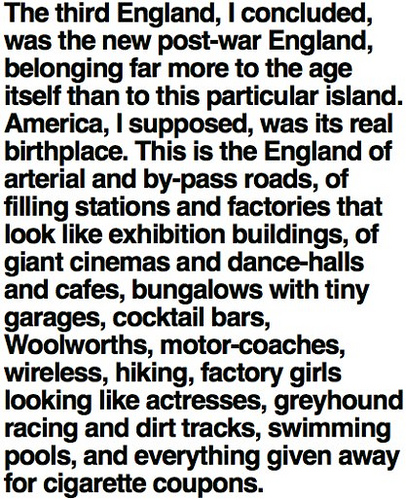
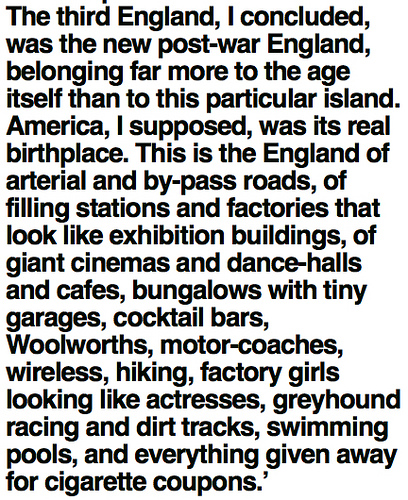
The third England, I concluded, was the new post-war England, belonging far more to the age itself than to this particular island. America, I supposed, was its real birthplace. This is the England of arterial and by-pass roads, of filling stations and factories that look like exhibition buildings, of giant cinemas and dance-halls and cafes, bungalows with tiny garages, cocktail bars, Woolworths, motor-coaches, wireless, hiking, factory girls looking like actresses, greyhound racing and dirt tracks, swimming pools, and everything given away for cigarette coupons."

Excerpted from English Journey by J.B. Priestley (1934). Penguin 1984, pp. 371-375. Lifted, with thanks, from here.

I don't know enough about Priestly to know, but it sounds to me like he had most affection for the second England, where I guess he'd come from, and he wasn't that excited about the third one. Of course to us now, that England of tiny garages, cocktail bars, Woolworths, motor-cars, wireless, hiking etc sounds like a golden age. It's now the mythic and appealing England poised between Empire and austerity. I don't think Priestly meant that these Englands replaced each other, but that they lived alongside each other, waxing and waning in influence and reach.

It made me wonder what other Englands we'd talk about now. How many are we up to? (And I suppose we might even acknowledge the existence of the rest of the UK at some point.)

I guess you could point to the make-do-and-mend England of the post-war years, or the optimism of post-war planning and the white heat of technology. They're still around. Or the grimness of Thatcher's England (though that's probably mostly about the decline and destruction of the second England). Or there's the England of universal consumption; shopping centres, call centres and dockland developments. Or multi-ethnic England. Or broadband and Sky+ England. Etc.

Though, actually, Priestly's Englands are deeper than that; 200 year+ Englands. Feudalism. Industry. So maybe we're still exploring the third one, and actually 'wireless, hiking, factory girls looking like actresses, greyhound racing and dirt tracks, swimming pools, and everything given away for cigarette coupons" sort of sounds like now too.

Anyway. It's a good thing to think about.    

February 26, 2009 | Permalink | TrackBack (0)

unnotebook

L1090279

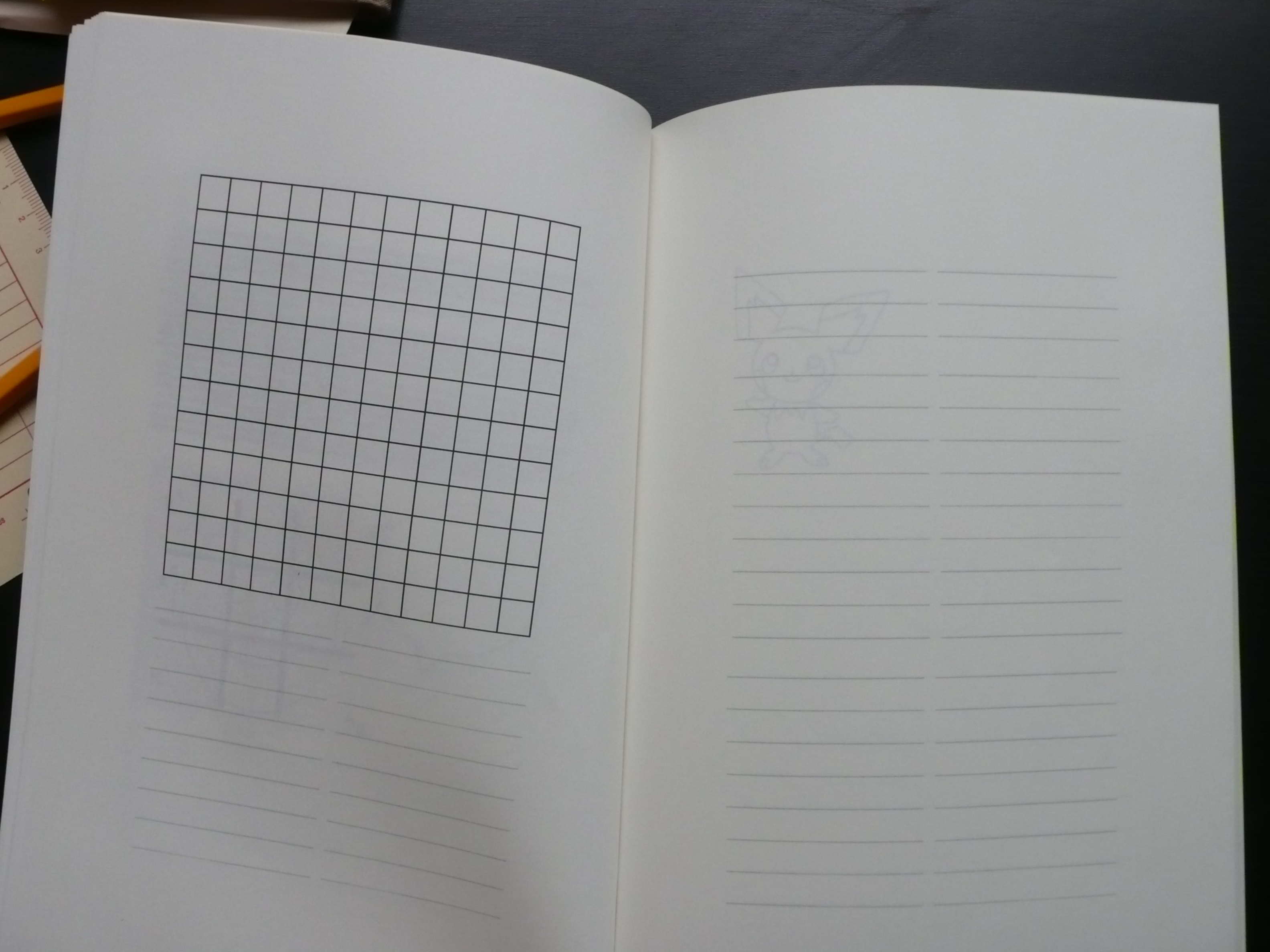
As I mentioned before, I've been messing about with an 'un' version of a notebook. I've always wanted a notebook that did two things:

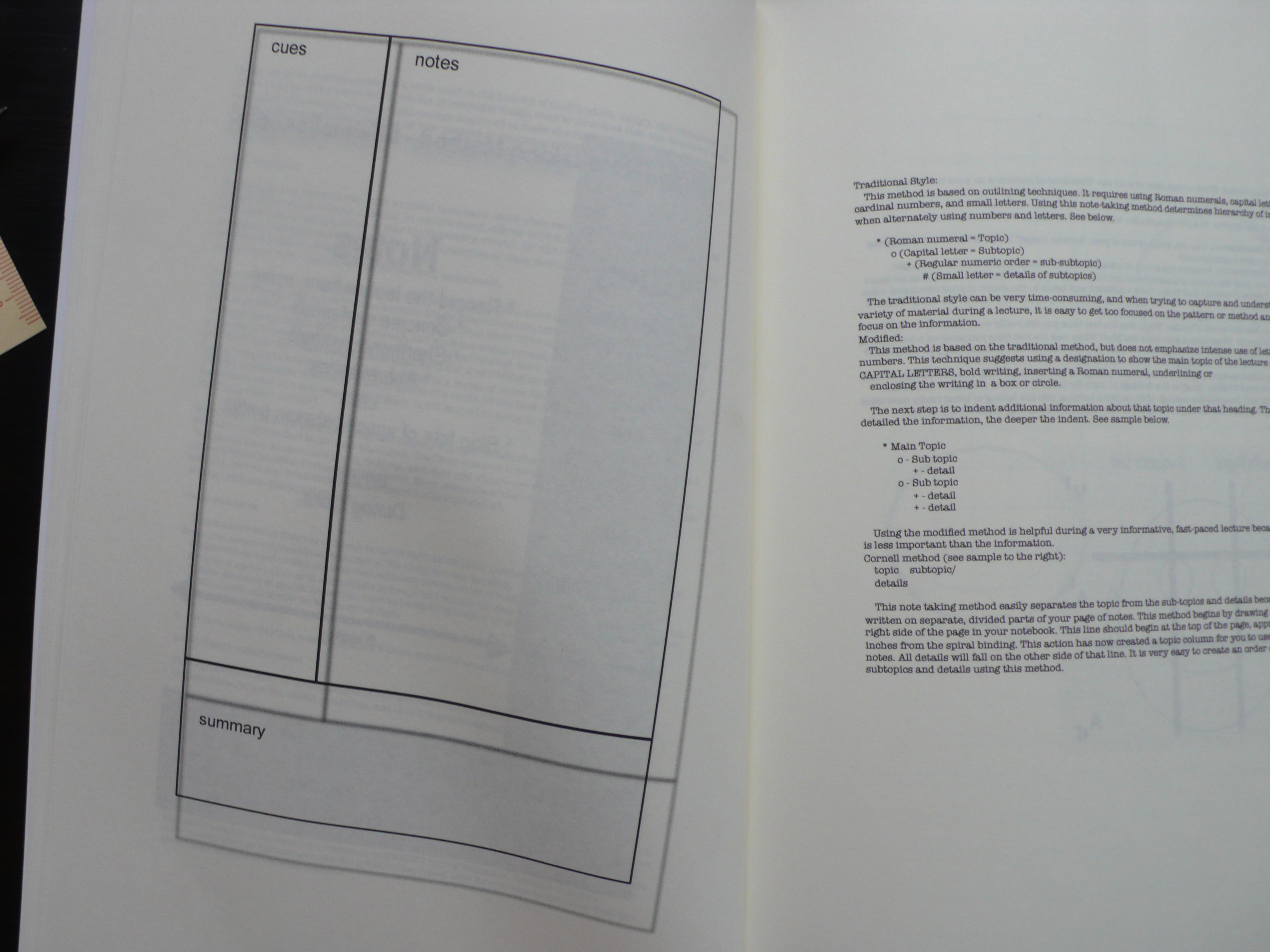
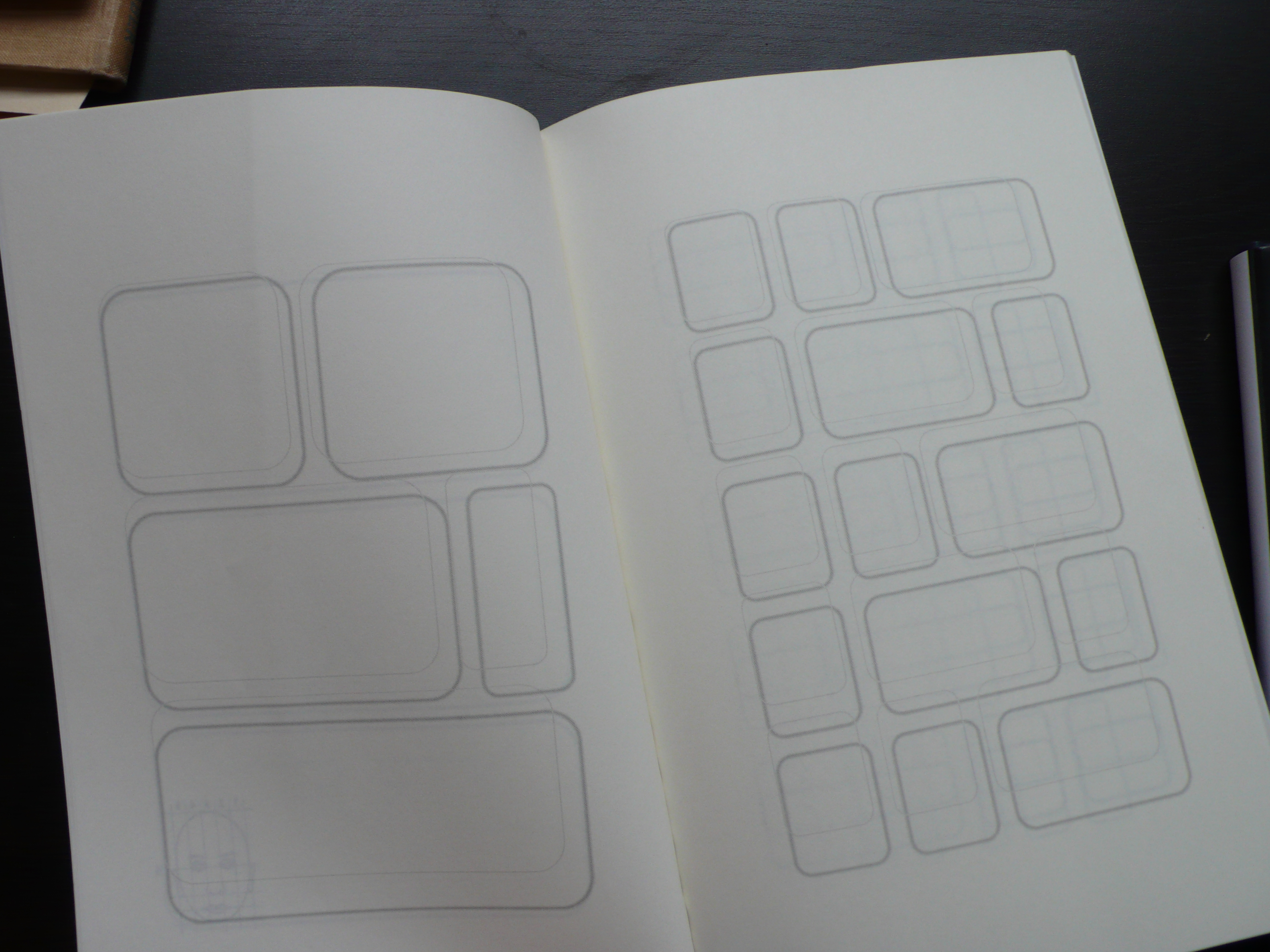
1. Helped you take notes in the most efficient manner. I'm not quite sure what that efficient manner might be though, so the first book allowed me with different styles:

L1090281

That's the Cornell method.

L1090280

Some random squares. You get the idea.

L1090282

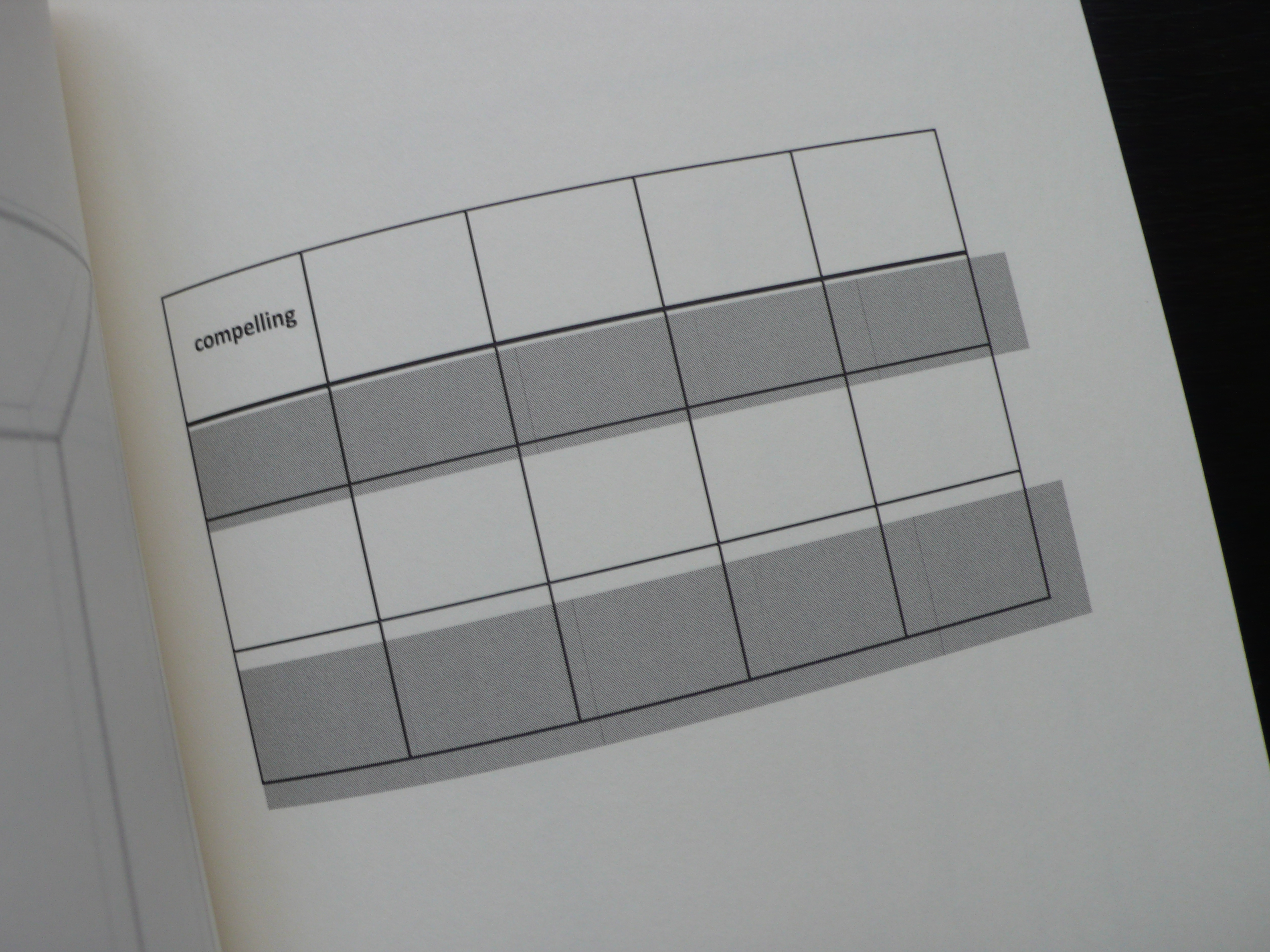
2. The second thing I wanted a notebook that would provide entertainment for those moments when the meeting is clearly a dead loss. So above is a template for making a crossword:

L1090284

And this'll get you started on buzzword bingo.

L1090283

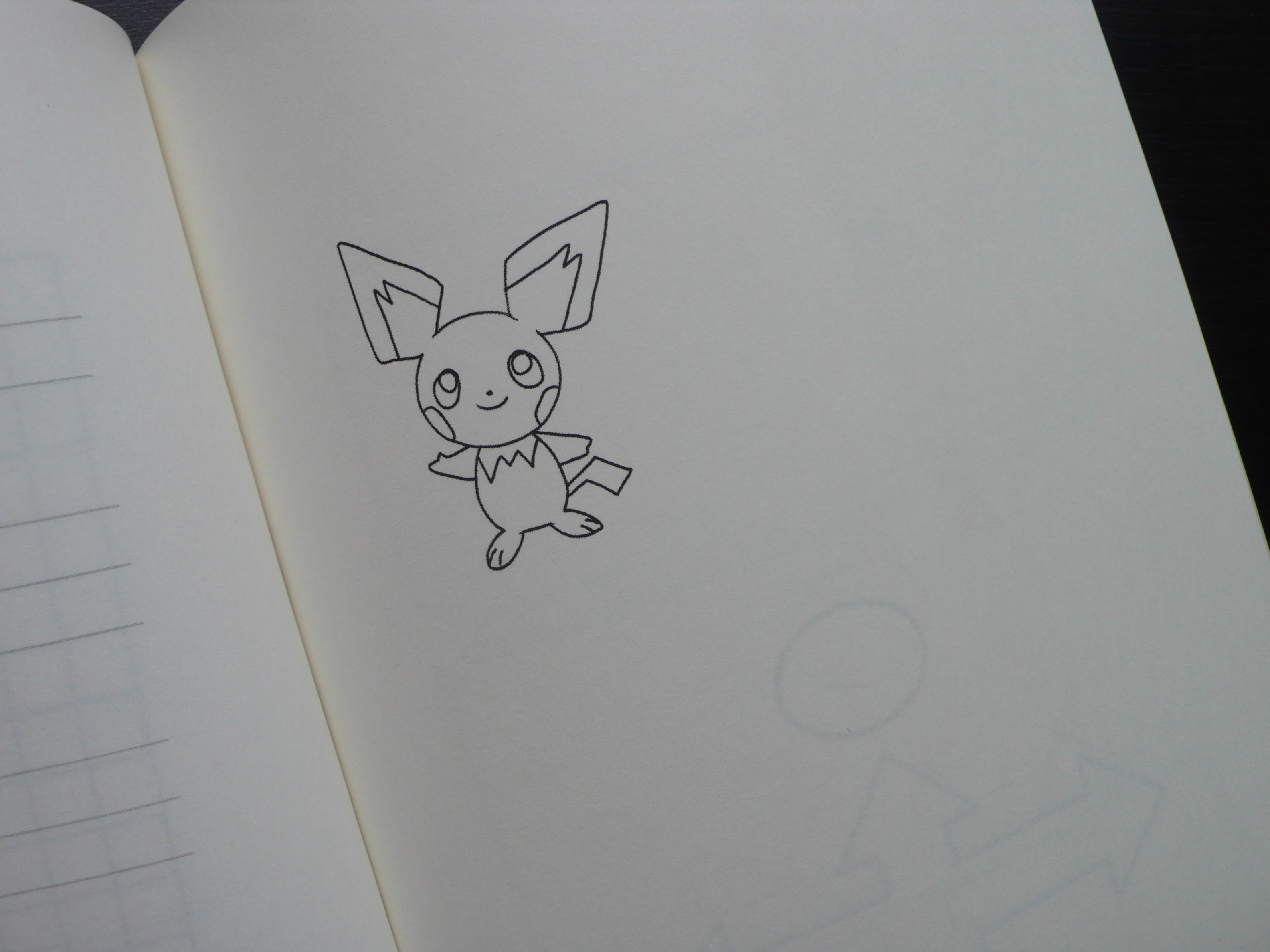
And this was so I could practise drawing Pikachu.

Lessons learned from notebook1:

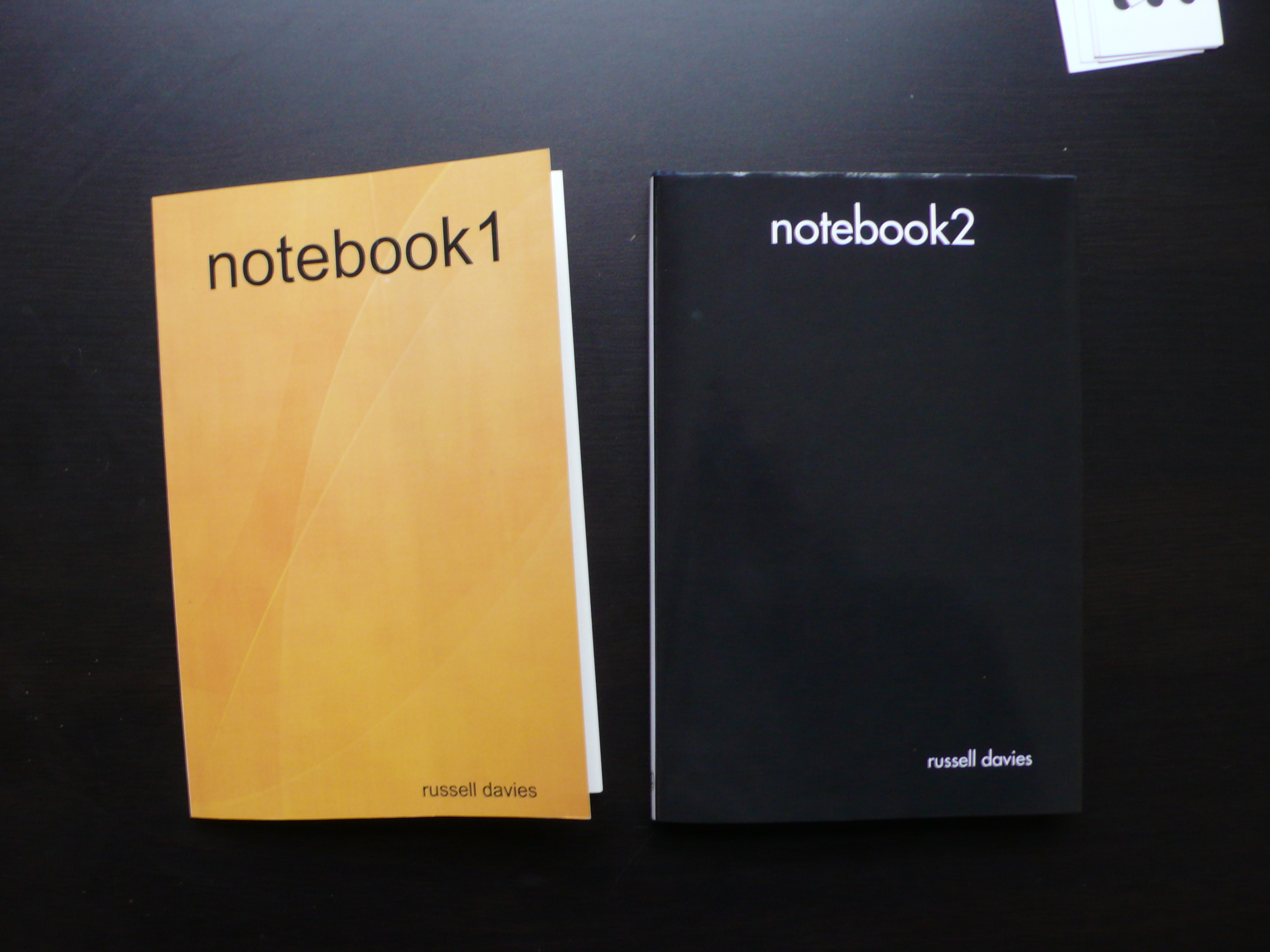
I didn't like the cover. It looked cheap. (It was cheap, it was the cheapest paperback format Lulu do. Which is very cheap.) The lines were all too thick and dark, it meant I couldn't ignore them if I wanted to which made some pages unusable. But basically, it worked. I filled it up quickly. Time to do another one.

L1090285

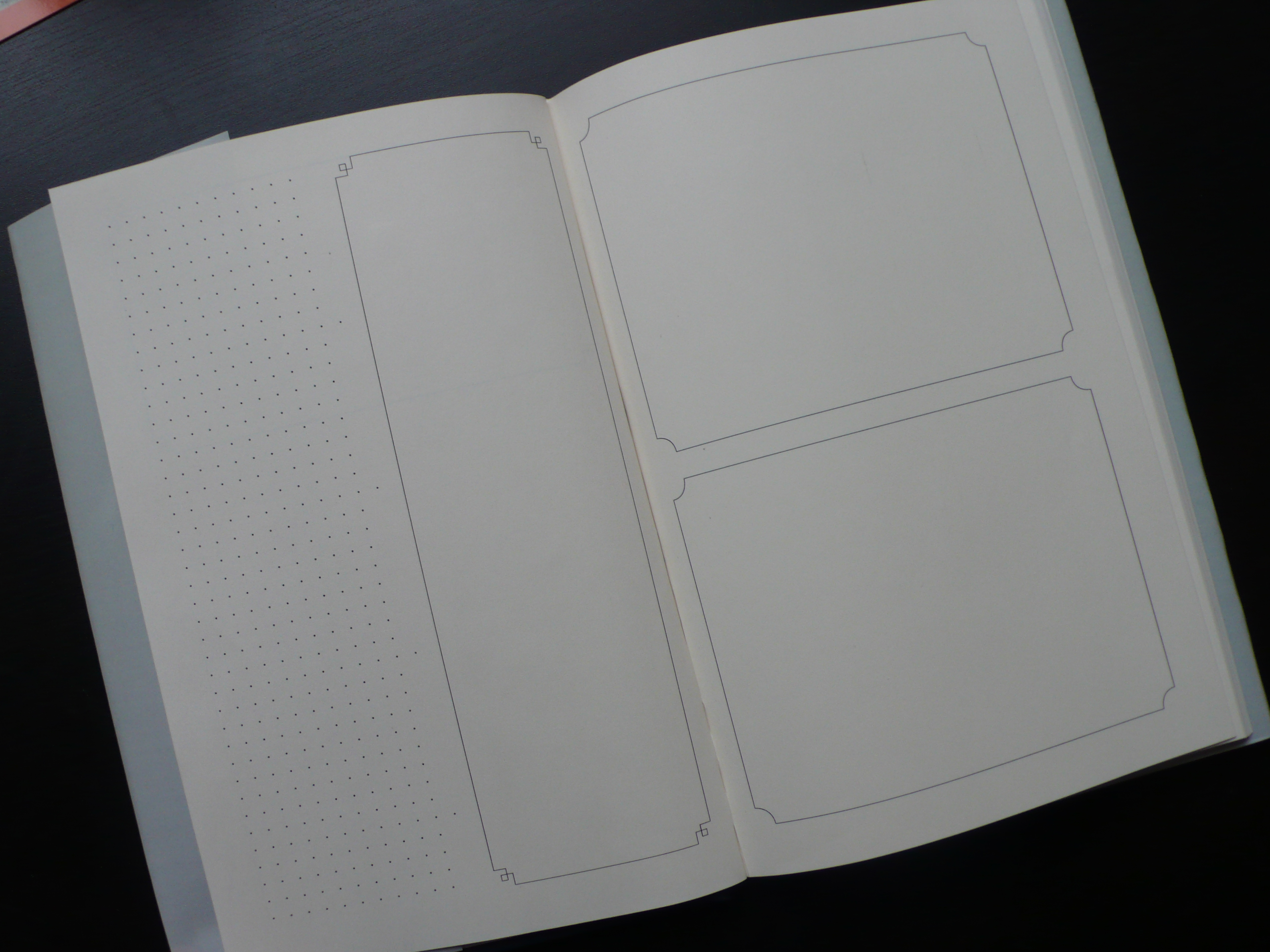
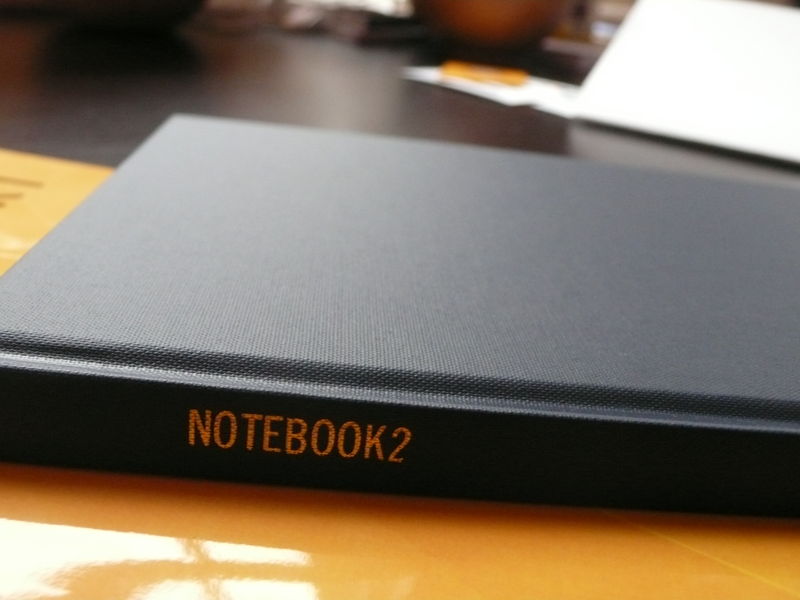
This is notebook2. I got Ben to help me out with the design this time. The upside is that the boxes looked nice and elegant and were of the proper thickness and lightness.

L1090287

L1090288

The downside is that he snuck quite a lot of his 'jokes' and 'ideas' in there.

L1090290

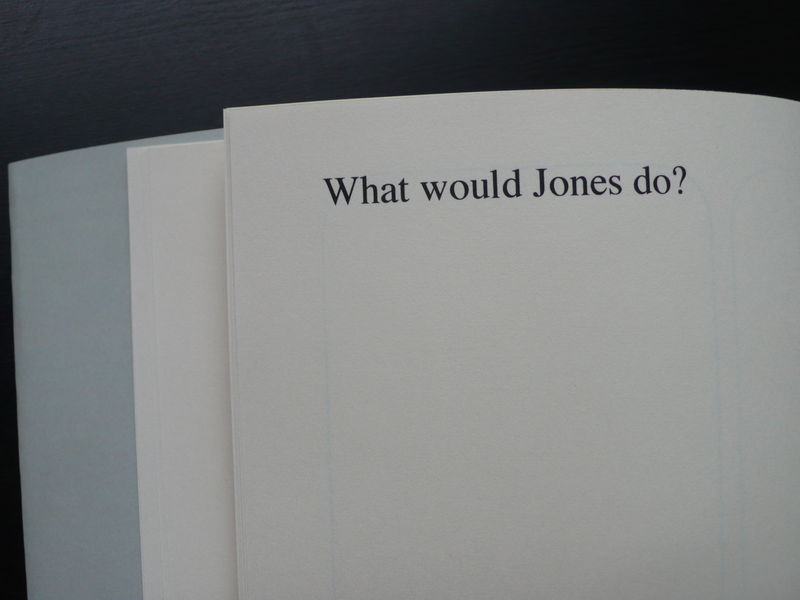
Then, at the back, I wanted to include a section of stuff that I'm working on. (I'm supposed to be writing a book proposal so I've bound all my notes in here hoping it will spur me on.)

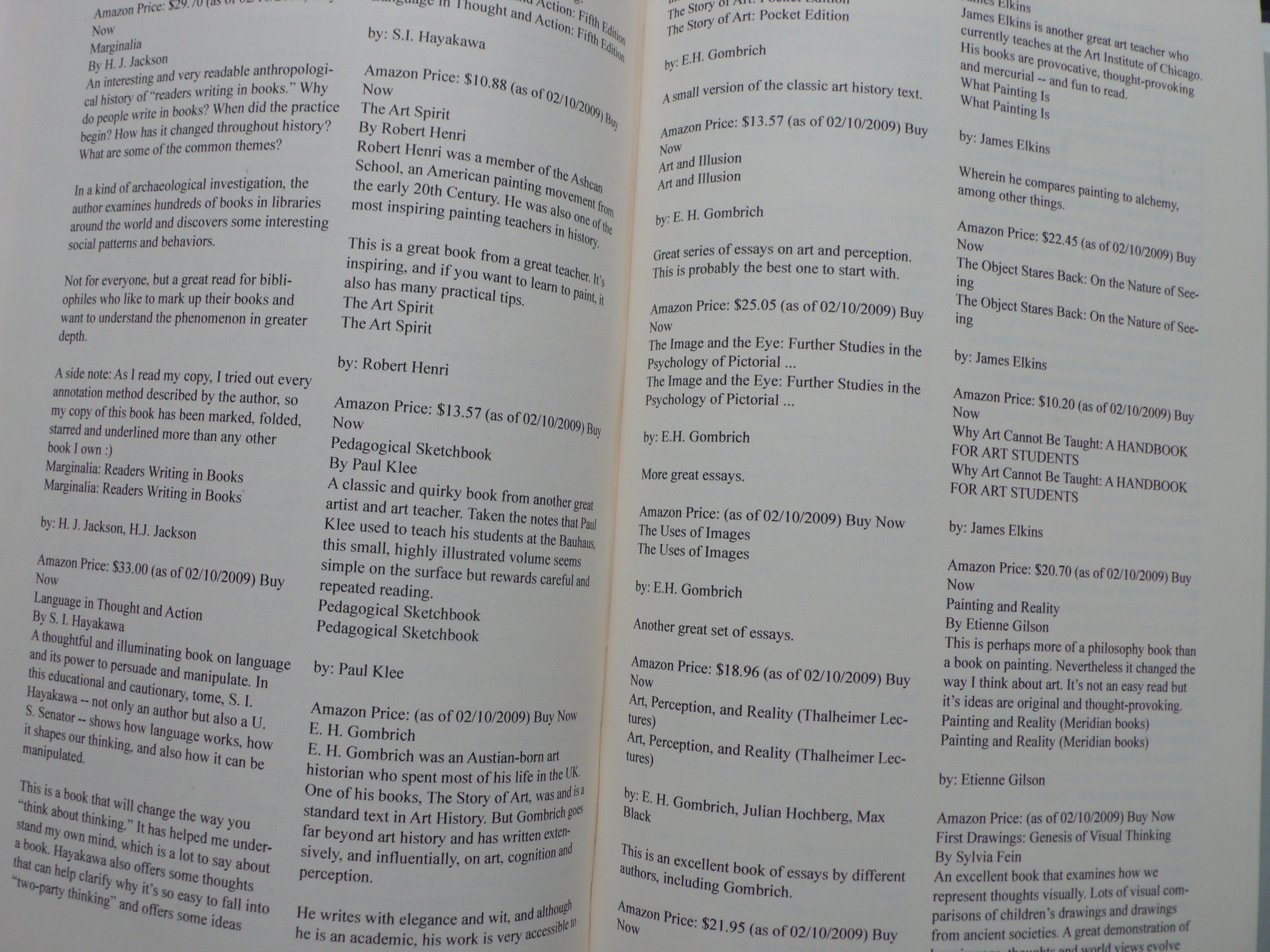
L1090291

And this is Dave Gray's Visual Thinking reading list. For when I'm in a bookshop and can't remember what it is I was going to get.

Notebook2 is a nice hardback book. More like a sketchbook. A bit pricier, and I don't really like the paper jacket thing, but it looks very classy with the jacket off.

L1090293

Anyway. That's that. And on with the music.

February 25, 2009 | Permalink | TrackBack (0)

fair play

Cosmiccatch1

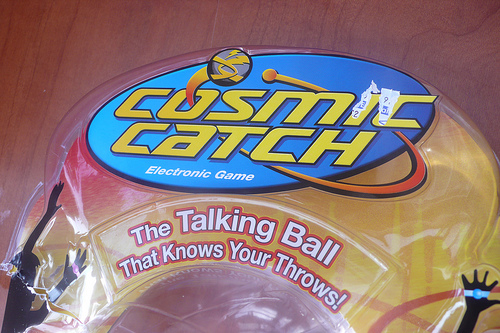
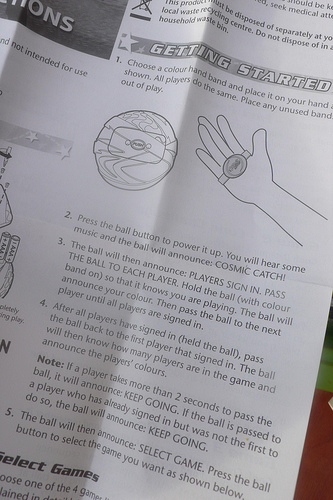
We bought this at the weekend. Dramatically on sale as the high street panics. I have to say, it's enormous fun, multiple generations had a laugh chucking a ball about, the prospect of which wouldn't normally have got any of us away from the DS. It caught my eye because of its RFIDness. Toy makers often get to new technologies early, and find interesting things to do with them.

Cosmiccatch7

Cosmiccatch4
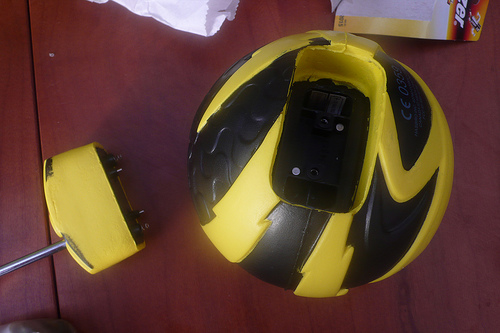
(The battery compartment is nicely buried in lots of rubber, seems pretty robust)

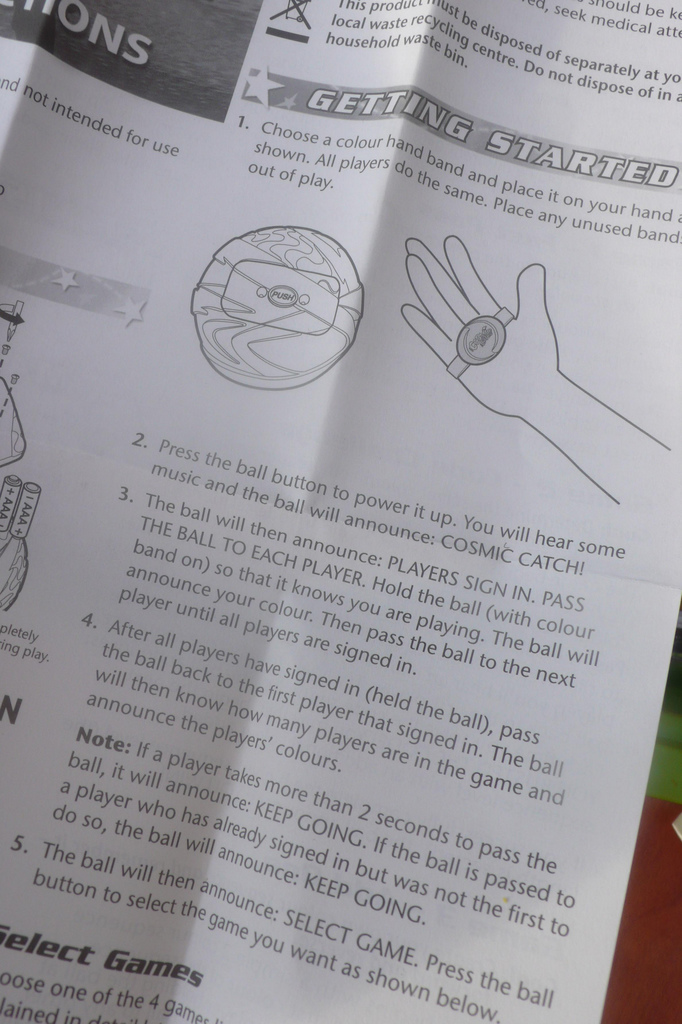
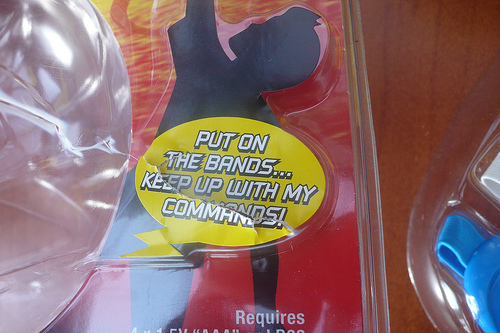
It's a simple thing, there are plastic bands of different colours to wear on your hands, so the ball knows who is who, and then the ball shouts at you, telling you where to throw the ball next. The simplest game is throwing from one person to the next, if you take too long there's an explosion noise. Cleverly the ball also records a high score for you. And there's a version of pass the parcel that works the same way.

Cosmiccatch5

Cosmiccatch6  

And I can already hear people tutting at the limits on children's creativity this might all imply. The the-children-prefer-the-box-to-the-toy-crowd tend to hate this kind of thing. It's not open enough, not free-form enough, too structured. "Put on the bands... keep up with my commands!" doesn't sound like the stuff you're encouraged to shout at your kids. (I tend to assume that kids like the box and the toy. They're not stupid, they play with both.)

But where this thing really scored is in an element I've not noticed in a lot of the talk about play - fairness. And kids are utterly, utterly obsessed with fairness. It's the most important element in any game. And human rule-enforcement is automatically deemed unfair. There is no referee, umpire or god-like grandparent that can escape being seen as unfair at some point, for some decision. But the commanding voice of Cosmic Catch escapes all that. The relentless, ineluctable judgement of the RFID machine brooks no argument, is prey to no human frailties and biases and is immediately seen as fair. Or actually Fair. Or even FAIR.

All of which makes for better playing. You lose yourself in the game, in the throwing, you're not looking for the moment of unfairness, for the opportunity to argue and sulk, you're just throwing and concentrating. It's rather hypnotic. Sure there's probably no teaching value, there are no opportunities to learn how to get on with other people and resolve your differences peacefully and all that stuff you're supposed to do with play. But sometimes you don't want to do that, sometimes you just want to play without having to worry about all that social stuff. And then you look up and you notice that you and your gang have thrown the ball to each other 135 times without dropping it and that feels like an achievement. A group achievement actually, if you want. And you knows its 135 because the ball tells you.

This seems like a good use of technology to me, to strip away some human responsibilities to let you focus on others. What this might have to do with Oyster cards and stuff I have no idea.

Anyway.

February 23, 2009 | Permalink | TrackBack (0)

postcard literature

IMG_0217

I've had a soft spot for Leaf Books ever since they had the good sense to award Anne a short-story prize. Now they're doing a fiction competition that's right in the spirit of dawdlr and slowpoke - it involves writing a story on a postcard. You should enter, it's only a postcard, that's not much, and you might win. 

February 18, 2009 | Permalink | TrackBack (0)

« Previous | Next »