Russell Davies

As disappointed as you are
About | Feed | Archive | Findings | This blog by email

interesting sounds again

IMG_0202

Back in 2007 I floated the idea of Interesting Sounds, people kindly expressed interest, but I never got round to doing anything about it. Then at the end of last year the good people of the Arnolfini in Bristol said they'd like to do an Interesting thing, and we realised that it would be a good place to do Interesting Sounds. So that's what we're going to do.

It's going to be April 26th, only £10, booking details on the Arnolfini page. And what are we going to actually do? Not 100% sure, but this is what we know so far:

It's going to be a bit of a musical weekend in Bristol.The Future Of Sound lot will be at the Arnolfini the day before and they always put on a splendid show. So it'd be worth being there for the whole weekend.

We're thinking of doing workshoppy/making stuff in the morning, talks/demos in the afternoon and drinks and chat in the evening (possibly with some performances of something.)

THE BASIC POINT is for people to show and talk about Interesting Sound-producing things they've made. Not just to perform with their 'thing' but to talk about what they've made, why they did it, what's interesting about it. It could be acoustic, electronic, anything. The principles of Interesting will apply - short talks, no frills, lots of clapping. As we're keeping people to 10 minutes then we're not going to insist on live demos (that will involve too much setting/tuning up). You can demo your thing live if you like, but you'll only get 10 minutes or so on stage and not much more for setting up, so if you want to make a video or audio or whatever that'll be great. Does that make sense?

We're hoping to get the informality and niceness of Interesting and cross it with proper musical geekiness and invention. Hopefully it'll be interesting for anyone who's into music or sound or that sort of stuff. I think it'll be good.

We're going to be looking for people to come down and take part, and I'll be posting more details on here as they come in, but if you'd like to join in and show musical stuff please let me know - email [email protected]

And, er, that's it for now.

February 16, 2009 in interestingsounds | Permalink | TrackBack (0)

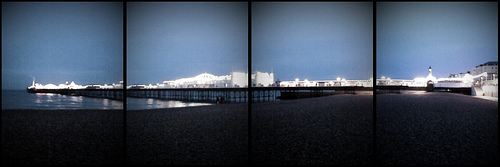
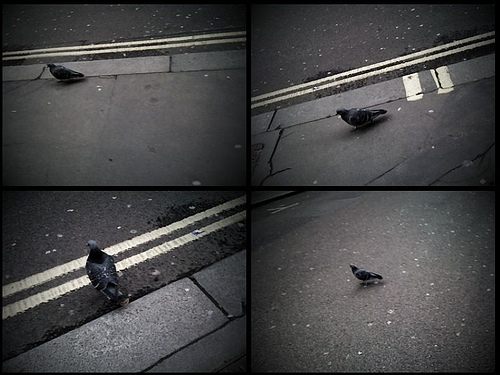
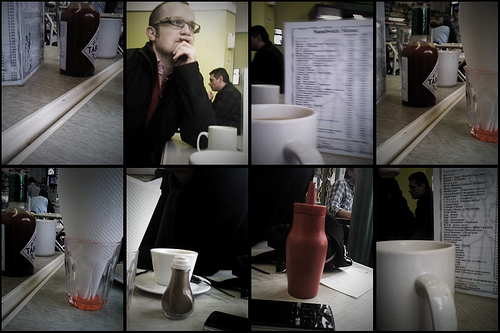
QuadCamera

Pier

Piegoen

Shepherdess

QuadCamera is fun. Worth getting. If you like.

February 16, 2009 | Permalink | TrackBack (0)

other interestings

I've been thinking about what we do for Interesting in 2009. Slightly anxious about it. Which might be why I've completely forgotten to mention some other Interestings, which I should have brought to your attention.

Firstly, Interesting Portland is going to be on April 9th, and I believe they're still looking for speakers. So you should volunteer, or buy a ticket or something. Portland will be a great town for Interesting.

And, I think I may not have pointed you at all the video from Interesting Vancouver, which is well worth watching. Fantastic stuff. And Brett is already planning Interesting Vancouver 2009 for October. So, you know, hurrah.

And, as for the UK, watch this space.

February 12, 2009 | Permalink | TrackBack (0)

dumb, trivial locative RFID project thing

Half

As you may have gathered by now, I'm incapable of building anything webby that doesn't involve printing it out, colouring it in and posting it to people. I know enough html to do links. That's it. But I'm also fascinated by this stuff and want to explore it by using it rather than just thinking about it, because thinking isn't a strong point either. So as soon as a consumerised version of a technology becomes available I tend to dive in. (Which normally means grappling with stuff that doesn't work very well.)

Anyway. RFID and proto-spiminess have been on my mind for a while. So I got myself the tikitag kit and the mir:ror one. And tried to think of something to do with them. Mucked about for a bit. Got bored. Stopped. Then, the other day, was reminded of something and tried again. And so I've made this:
DSC02741

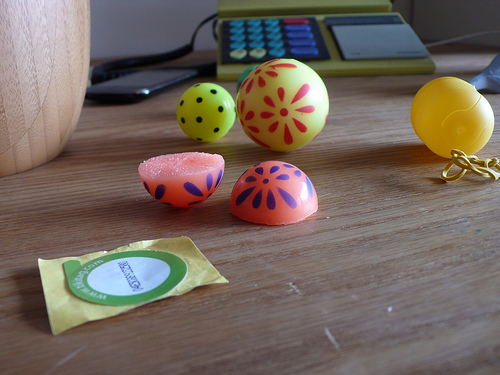
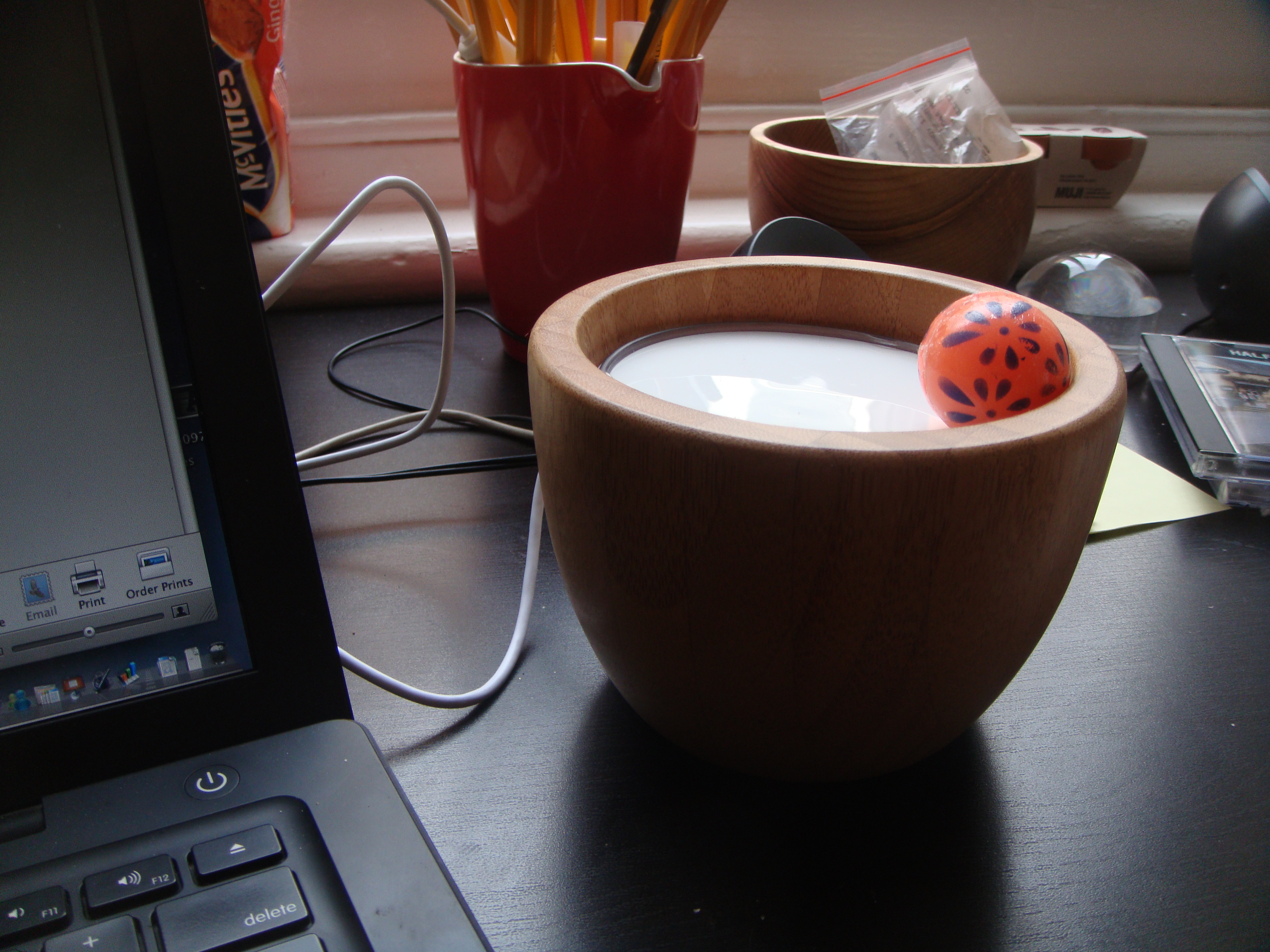
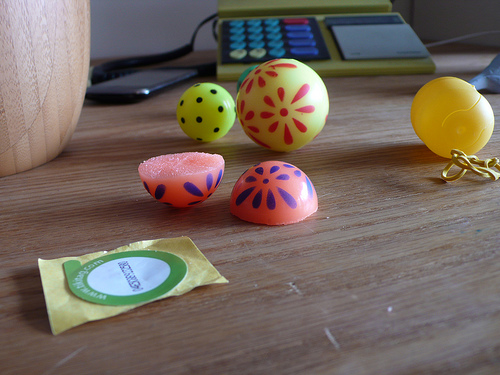
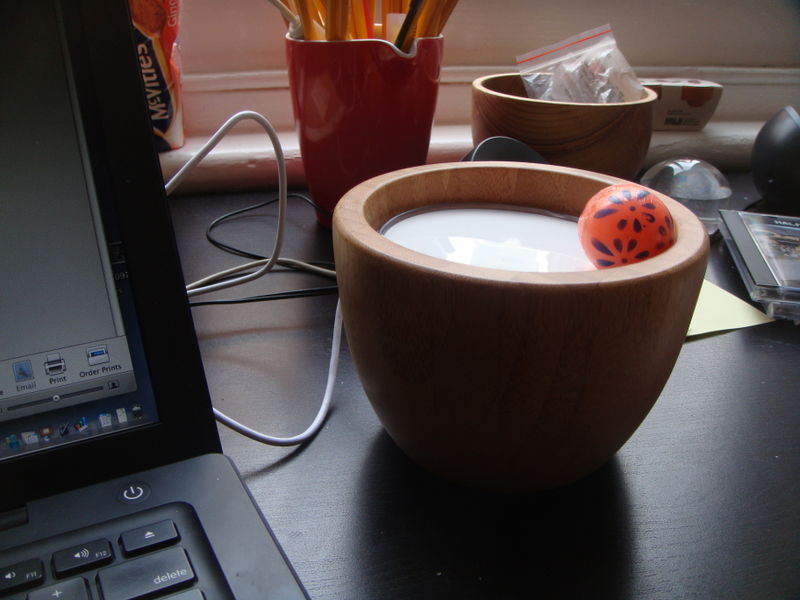
It's a mortar (or maybe it's a pestle) with a hole drilled in the back and the mirror thing stuck in it. On top of it is a bouncy ball that's been cut in half and glued back together with a tikitag RFID thing in the middle. All in rather an ungainly manner. These are now connected to my computer at the office.

When you stick the ball on the mirror reader it fires up and posts the word 'work' to a twitter account called 'russellisat'. When you remove it, it posts 'large'. The tikitag reader is connected to my machine at home. Sticking the ball on there posts the word 'home'. (It doesn't seem capable of doing anything when you remove a tag, though I might have missed it.)

And that's it - it's a place-announcing machine with three states: russell is at home, russell is at work, russell is at large.

OBVIOUSLY there are much easier ways to accomplish this, if that was my goal. I know this is a lame and trivial use of technology. I'm sure other people have done this better, slicker, whateverer. There's probably even a literature of it. But I was trying to find out for myself what it's like live with this sort of thing, and this is what I can do.

It's early days but here are thoughts so far:

1. I much prefer the mirr:or reader to the tikitag one because it gives you some visual and audio freeback that something has happened. And it occasionally actually works. Whereas the tikitag one doesn't much. You wouldn't want to rely on this stuff for anything mission critical. Like twittering your breakfast.
Pockets

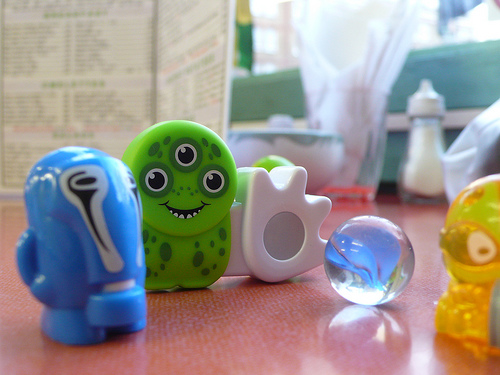
2. The object you chose to represent your presence seems quite important. For efficiencies sake I could have just used my Oyster card, or stuck the tag on my keys but I think that would have made it too important and reduced the ritual and playfulness of it. I want to be able to forget the rubber ball (partly for plausible deniability if I want to pretend to be somewhere I'm not, and partly because the possibility of forgetting demands paying attention to the act, which seems important.) I've been thinking about the stuff I carry in my pockets a bit. I suspect this kind of stuff'll be the among the first things to get smart/spimey. I like the idea of conkers, marbles and pocket watches with data and connectivity inside. They seem like appropriately personal things to represent you.

3. Home/Work/Third Place seems like enough locative granularity for something this public. They're not just geographical locations (and they do move around) they also say something about the kind of stuff I'm likely to be doing and the kind of interruptions I'm likely to be interested in. It's the kind of information that might help someone wondering if you're around, or fancy a cup of tea, without constantly bothering them with your locatostream (I made up a word).

4. Twitter's not quite the right vehicle for declaring this information. It's not interesting enough to subscribe to. Ideally I'd like it to trigger a webpage or widget that looked like one of those On-Air lights you get in radio studios and it'd just say home/work/elsewhere but I don't know how to do that.

5. I do slightly worry that even this level of location-announcing represents over-sharing and bad security but at the moment the novelty outweighs that. If people start following that twitter account I'll probably get scared and close it. (Especially they're called Fingers McRobber or something.)

6. All the software and apps and everything is really creaky right now. Horrible to use. But this seems like a platform to me, like the iPhone or Twitter, a platform where people could build neat little things.

Er. That's it. I'll let you know how I get on.
February 11, 2009 | Permalink | TrackBack (0)

change versus more of the same

Doestheinternet

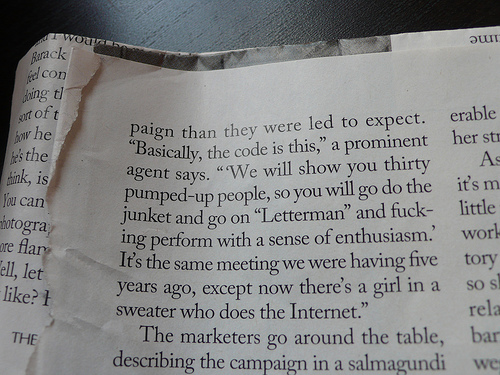
I just read a tremendous story in Jan 19th issue of The New Yorker, all about the marketing of movies. It's full of the modern equivalents of those sharp, gung-ho, amoral, marketing/advertising people you get in Mad Men. Or agents living up to their image. But I thought this quote from an agent was particularly interesting.

Because in a lot of bits of a lot of businesses all that's changed in the last 5 (or 50) years is that "now there's a girl in a sweater who does the Internet." And speaking as someone who's often that girl it's useful to remember how things look from the other side of the table. The reality might be different. We might be about to flatten these stupid businesses with the web, but maybe not. And for a lot of people, a lot of the time, not much has changed, and doesn't show much sign of doing so.

February 10, 2009 | Permalink | TrackBack (0)

the invention of everybody / here comes air

L1090190

I must do a proper 'blog all dog-eared pages' about Steven Johnson's  The Invention Of Air because it's packed with excellent stuff, but I wanted to mention a particular aspect first. Clay Shirky was in London last week, talking at the ICA and LSE, and making dents around the internet, so while I was reading The Invention Of Air I was thinking about Here Comes Everybody, and an interesting parallel popped up. In answering a question about how to make a living in a world of generosity and unmonetisable content (especially with reference to newspapers) Mr Shirky said something I thought tremendously helpful (and I'm probably paraphrasing badly ):

"We're not going from a world of Business Model A to one of Business Model B, we're going from Business Model A to Business Models A to Z".

That seemed very true and smart to me. So much of the debate about new media, deaths of media, blah blah blah, is about what's the new model going to be? If it's not A, then what's B? when of course, there probably won't be a single dominant model, there'll be tons of different ones. Old ones, new ones, all mixed together, often within the same organisation. At the moment our organisational options are limited: there's Government, The Corporation, The Charity and The Cooperative. And that's about it. The internet means that (as Mr Shirky says) Group Action Just Got Easier but as anyone who tries to start a new sort of organisation will tell you, the legal niceties haven't caught up with that yet.

And then I read this in The Invention Of Air:

"One of the things that makes Priestly's career so interesting to us now is that his work lay at the intersection point of four institutional models of idea production, two of which were just emerging into a recognizable shape during his lifetime, and two there were just beginning a long slide into relative obscurity. Today, we take it for granted that advances in science and technology are cultivated in two primary environments: private businesses or public organizations...

But Priestly was only a tourist in those two soon-to-be-dominant environments; his career mostly flourished in a different soil. First there was the model of the solo, free agent investigator - working alone in this lab, supported by a single patron or small group of patrons who refrained from meddling with his research objectives. And there was the loose connectivity of the small society - the Honest Whigs and the Lunaticks - a group of intellectual allies with different fields of expertise, sharing insight and inspiration (along with the porter and Stilton), supporting one another emotionally and, at times, financially....The amateur and the small society were the two prevailing frameworks for Enlightenment science, and the were uniquely suited for a maverick, cross-disciplinary thinker like Priestly.
"

The amateur and the small society seem like exactly the organisational models that the web supports so well. Perhaps they're due for a revival and we can find financial and legal frameworks to support them. And perhaps the old idea of subscription might be one such way:

"The eighteenth-century concept of subscribing is one without an exact modern equivalent, falling somewhere between a magazine subscription and a charitable donation to a museum or park or university. The donation came with perks - Priestly's subscribers were sent first editions of all his writing - but the money contributed generally exceeded by a wide margin the market value of the publications. It was nice to be first in line to read Priestly's latest, of course, but one subscribed because Priestly himself was a cause worth supporting. For Priestly, subscription was a way of diversifying the patronage system; rather than tying his fortunes to the whims of a single aristocrat, Priestly was assembling a broader support network to keep his ideas alive."

Which reminds you of Kevin Kelly's 1,000 True Fans idea, but applied to the sciences rather than the arts. Which would be good.

If I had a lot of time and money right now I think I'd be spending it on investigating and inventing new legal frameworks for group activity; commercial, non-commercial and all the interesting hybrids of the two. And perhaps I'd start by looking at some of these Englightenment models.

Anyway. Just a thought.

February 09, 2009 | Permalink | TrackBack (0)

the end of the beginning

Lyddleend2050

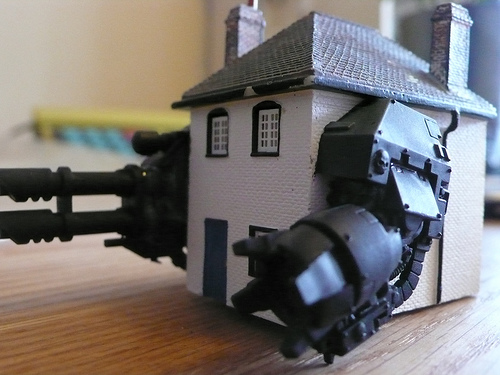
The last lot of Lyddle End 2050 buildings go to the post office tomorrow. Then, that's finally it for the ones I'm sending out. You can still join in if you like, obviously, but you'll have to supply your own building. (And big thanks to the people who've already done that.) Deadline is the end of Feb. Then we need to think of a way of displaying them all, in the real world and online.

February 08, 2009 in slow projects | Permalink | TrackBack (0)

mvp here I come

Thepoint

February 07, 2009 | Permalink | TrackBack (0)

light and power

Lightandpower

February 05, 2009 | Permalink | TrackBack (0)

playful utility

L1090104

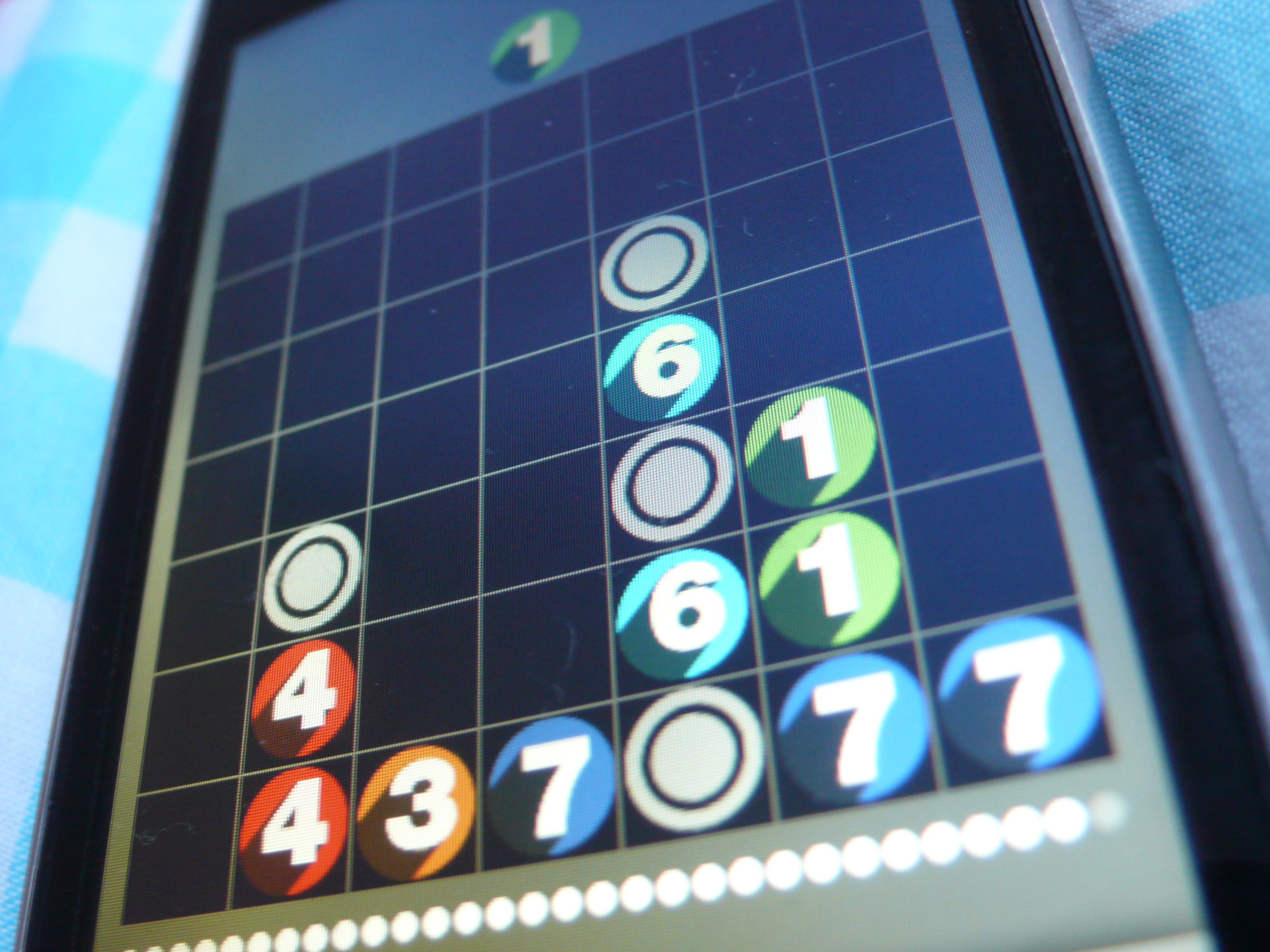
I've been playing Drop7 a lot recently. It's kept me up until 3 in the morning. I've missed tube-stops. I've stopped looking for work. It's extraordinarily good fun. But even I realise that walking along the street playing it is probably a stupid thing. However, the ability to play games on the tube, on the bus, in a queue leaves me feeling a little empty when I'm just walking along listening to music. I want to be doing something more. Maybe not playing a full attention game but I'd like to be playing a glanceable game.

L1090101

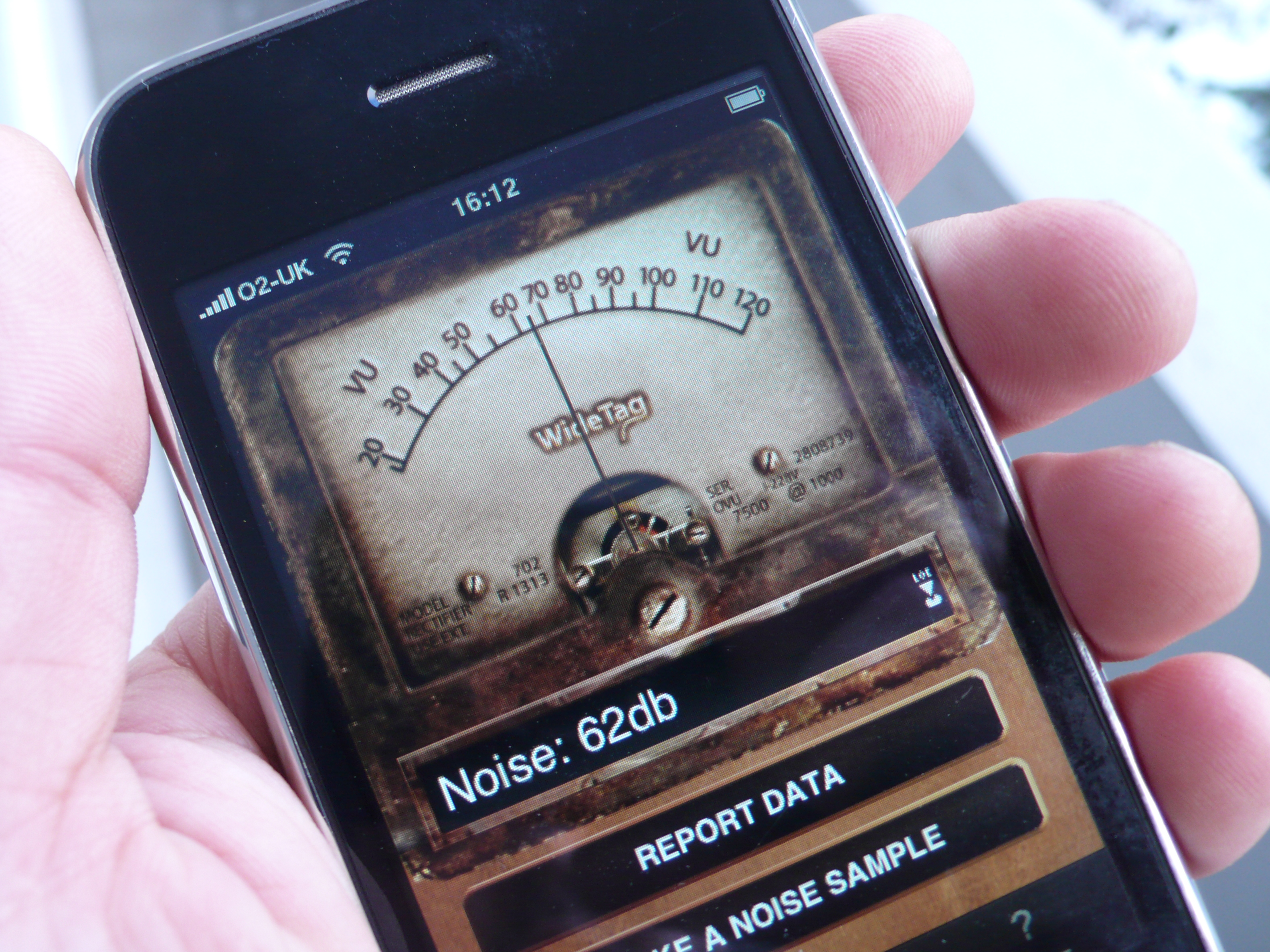
WideNoise is quite like what I'm after. It's not really a game at all, it's a tool for measuring sound levels and sharing them on a map. But it's got just the right levels of interaction to make it playful while walking along. You poke at it occasionally, it makes some satisfying buzzing and you feel like you're engaged in something. It turns the walk into a project. It's another bionic noticing tool, encouraging you to pay attention to something about the city you're in. And the slightly nukepunk design helps too, it makes you feel like a technician and a member of Kraftwerk. If WideNoise had points, some kind of scoring system, it'd be perfect.

But of course it's not a game. It's a rather functional thing designed to crowdsource the measurement of noise pollution. And given the limitations of the technology it's only approximate. But it feels like a sign of something important - showing how simple sensors + people + lots more people can measure important things and make you feel good about doing it.  

February 03, 2009 | Permalink | TrackBack (0)

« Previous | Next »