Russell Davies

As disappointed as you are
About | Feed | Archive | Findings | This blog by email

innocent blogging

Innocent

Innocent drinks have quietly started blogging. Which is fantastic. The brand excudes such a genuine, funny and human voice that it's going to be fascinating to watch the way they blog. Hurrah for them. And shame on every other drinks company that has nothing to say and no courage to say it.

June 09, 2006 in sites | Permalink | Comments (8) | TrackBack (0)

perfect object

1

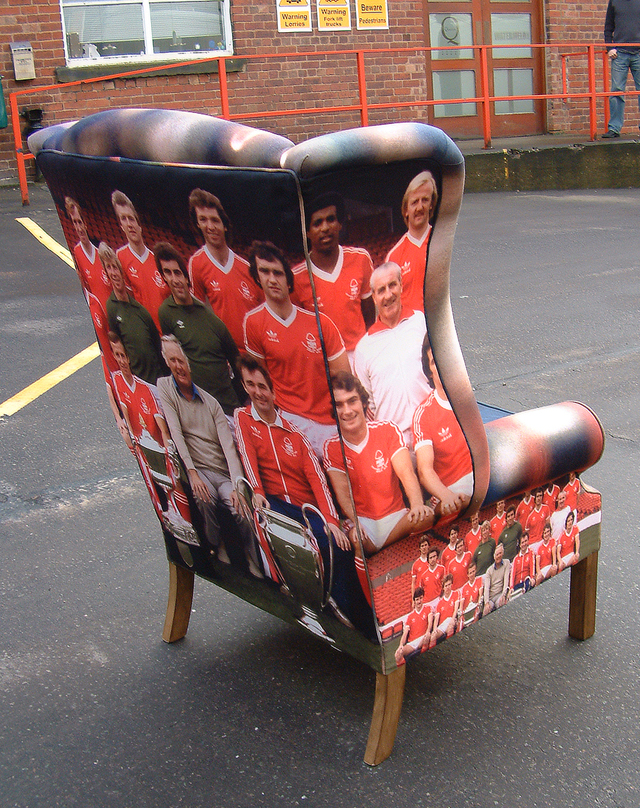
I've never wanted to own anything as much as I want to own one of these. A Brian Clough chair. Apparently this sits in Forest's reception, but another can be made by these splendid people

3

June 09, 2006 in huh? | Permalink | Comments (1) | TrackBack (0)

understanding desks

Desk

Ben pointed me at On My Desk, which is a simple, lovely idea. "Creative folk share the stuff on their desks". Learner planners always ask me how to work well with creative people. One simple suggestion; notice what's on their desk, it'll tell you a lot about them.

(picture from the desk of jared chapman)

June 09, 2006 in creative spaces | Permalink | Comments (0) | TrackBack (0)

decoding huntington

Flamingo

He doesn't do it very often but when he posts it's always well worth reading. And Richard's done it again. Really sharp, really useful thinking.

And he wisely reminds us all about Decoding Advertising. I remember reading this when I first started in advertising (largely because it seemed to be the only academic book about advertising at the time, and I thought planning was supposed to be an academic thing) and I thought it was brilliant. But then 10 years of advertising 'training' banged it out of me, and I've not thought about it until I just read Richard's post. Must revisit it. Especially since I probably completely misunderstood it.

June 08, 2006 in sites | Permalink | Comments (0) | TrackBack (0)

IT conversations on Thursday 4

Itclogo_1_2

Bob Sutton is an interesting bloke. He's Professor of Management Science and Engineering at Stanford University and he's co-written this book; Hard Facts, Dangerous Half-Truths and Total Nonsense which aims to separate the fads from the useful stuff. He tells good stories and offers common sense in this interview from NPR's Tech Nation.

June 08, 2006 in IT conversations | Permalink | Comments (0) | TrackBack (0)

it's about politeness

Cokeposter

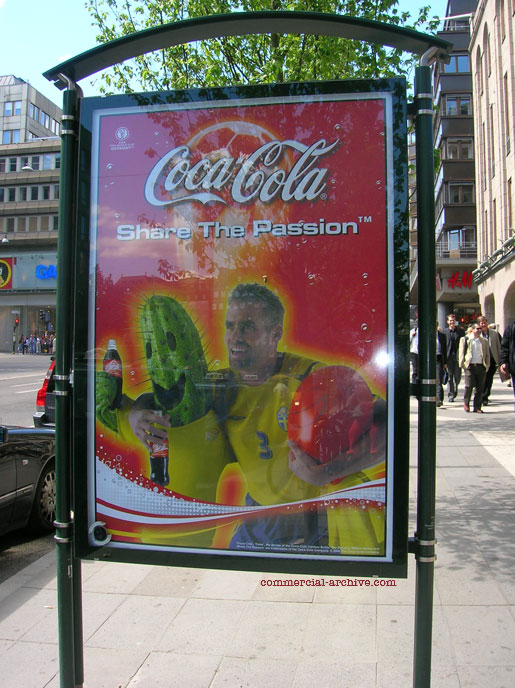
Urban Spam This Coke poster shouts Goal! at you when you walk past. (Literally, not in the way art directors say a poster 'shouts' at you). Intrusive and annoying. via MIT adlab.

Pepsiacc

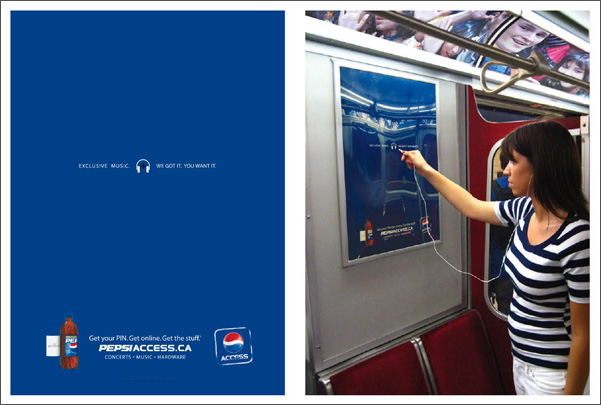
Not Urban Spam This Pepsi poster lets you listen to some music if you plug your headphones in. Not annoying, actually intriguing. It's the difference between offering to share with someone and imposing yourself on someone. via Make

June 08, 2006 in urban spam | Permalink | Comments (2) | TrackBack (0)

another sci-fi reference

Brand5

One of Rob@cynic's comments below reminded me of my favourite definition of a brand. (Which completey undermines my points below about being straightforward with language etc, but hey, I'm a planner, what do you expect, consistency?)

It's the same as William Gibson's definition of cyberspace - a "consensual hallucination". That's what a brand is, a "consensual hallucination", it's something illusiory that only exists because sufficient numbers of people are willing to pretend that it's real.

June 08, 2006 in thinking | Permalink | Comments (5) | TrackBack (0)

daddy, what's a brand? part 1

Brand3

I've been thinking a lot about what we mean when we say 'brand'. (Not prompted by Arthur, I just thought that was a slightly funny title.) In this and the preceeding/following posts (depending how you look at it) are some of those thoughts:

It would be quite useful to stop using the word brand altogether. (Though it's a hard habit to break)

Because using the word brand often seems to be an excuse for talking a lot of bollocks. Which I guess I'm possibly just about to do.  Using the B word seems to give people the option of detaching themselves from common sense and a real understanding of people. Using the B word seems to lead to pointless brain-storming, ill conceived projective techniques and endless tiny diagrams.

How about if we just used these words - product, service, company (or organisation) and reputation. And maybe, if we really have to, image. We all know what these words mean. We all know how we would go about managing and improving these things. We don't need to talk bollocks to talk about these things.

Thinking back to my days on Honda I suspect part of their brilliance was that they refused to let us use the world brand. We were never allowed to talk about brands. We weren't allowed to think of doing a 'brand campaign' (with the inevitable corollary of also doing a 'product campaign' and then having huge fights about which one got the biggest budget blah blah blah). We only ever did product ads, however minimally they featured actual products. It's just that one of the objectives of these ads was called 'image up'.

So how about if we dropped the word brand for a bit? it seems like a small tweak in language, but it might create a bigger tweak in thinking.

(I will now proceed to use the word brand an enormous number of times, assuming you're reading down the page. Ah well.)

June 07, 2006 in thinking | Permalink | Comments (6) | TrackBack (1)

daddy, what's a brand? part 2

Brand2

We need to distinguish between brands and BRANDS

As many of us have, I've been reading Neil Boorman's splendid Bonfire Of The Brands. He's writing a blog about writing a book about burning all this branded goods as an experiment in living 'brand-free'. Which is rather noble and interesting. And is just the kind of experiment which makes you think about stuff. And it made me think about what exactly he means by 'brand'. Because mostly what he talks about are highly-branded goods, luxury things, fashion things. Not soap powder and hammers. There's not much discussion (unless I've missed it) of the brand of matches he's going to use to start his fire or what'll happen when he burns the Esso/Shell/Tesco fuel in his car.

(And I know I'm being annoyingly literal here and he's too smart and savvy to pretend you can live an entirely brand-free life unless you're an ex-member of Crass. I think he's just aiming at a thought-provoking gesture and a life less mediated by brands, which seems entirely fair. Anyway if you were going to be entirely brand free you'd pretty end up doing what Michael Landy did, and destroying all your possessions. Which was another fascinating project. I guess you could get everything from Muji, but that's sidestepping the point, it's just another brand. One of the best fictional discussions of brand-free-ness is in Pattern Recognition because Cayce Pollard, the protaganist, is allergic to brands, but then she's a brand-consultant.)

Anyway, what it made me  realise is that when we talk about brands we're talking about at least two different types of thing, which you might divide up like this:

brand - a service or product where most of the value is in the service or product

BRAND - a service or product where most of the value is in the image or reputation of the service or product

(I imagine the latter is mostly the kind of brand that provoked the affection and then the ire, of Mr Boorman)

You see what I mean? Does that seem useful? I know it's naive and simplistic but isnt' simplicity supposed to be very fashionable right now? I think a distinction like that might be helpful to think with.

And I don't think, as many people might, that brand is neccesarily better than BRAND. They're both equally valid sources of happiness and utility for people. It's just that if we're going to make them useful, interesting and relevant it's worth knowing exactly what kind of bRaNd we're talking about.

June 07, 2006 in thinking | Permalink | Comments (3) | TrackBack (0)

daddy, what's a brand? part 3

Brand1

Brands are easy, people are hard

As I've probably said before, I think managing a brand (or product, or service) is really rather easy; be honest, be interesting, create happiness, create utility. Or at least it's easy if there's just you managing it. Or you and your husband. Or you and your mate from college. Brands only get difficult when large organisations get involved, say anything from 5 people to 500,000 people.

Because the stuff that's simple when you make all the decisions yourself, and it's all in one person's head and one person's soul, are frustratingly impossible when you've to try and get groups of people to do the same thing. We don't have the language to talk about the complexities and nuances of brands, we don't all see the same thing when we look at one or understand the same thing we talk about what we're going to do. So as soon as the management of the brand lives in more than one person's head it starts to fracture. Which is where all the brand management and planning tools come into play. They're not really there to help you understand the brand, they're there to enforce it, to try and make sure the organisation has some shared sense of what it means. And they can never really do that. And if it can't be done through benevolent shared understanding then they do it with compulsion, by issuing CI guidelines and manuals and three-ring binders. And maybe once, in the days of monolithic and mediated brand communications that might have worked. But not any more. Not when so many brands depend on real human contact. And every conversation can't be scripted. Then the brand really does live in every person's head and every person's mouth.

This is the hard part about managing brand-owning organisations, not managing the brand, but managing the people who are managing the brand. This isn't really news, but I think its worth remembering. I think smart planners and strategists should bear that in mind when they're  trying to make something happen inside an organisation.

And don't get me started on the fact that, of course, none of these people actually manage the brand anyway, their customers do that. (Except, that I tend to use 'managing' in the sense of 'coping' rather than 'organising'.)

June 07, 2006 in thinking | Permalink | Comments (6) | TrackBack (1)

« Previous | Next »