Russell Davies

As disappointed as you are
About | Feed | Archive | Findings | This blog by email

from product to project

HMDbag

Howies have been talking about this for a while now. And now they've done it. They've launched a range of stuff that is designed to be very long-lasting. They guarantee it for 10 years. So they've made very high quality stuff. Which is correspondingly expensive. But, as Matt points out, its sort of in-line with Bruce Sterling's last Viridian note:

"It's not bad to own fine things that you like. What you need are things that you GENUINELY like. Things that you cherish, that enhance your existence in the world. The rest is dross.

Do not "economize." Please. That is not the point. The economy is clearly insane. Even its champions are terrified by it now. It's melting the North Pole. So "economization" is not your friend. Cheapness can be value-less. Voluntary simplicity is, furthermore, boring. Less can become too much work.

The items that you use incessantly, the items you employ every day, the normal, boring goods that don't seem luxurious or romantic: these are the critical ones. They are truly central. The everyday object is the monarch of all objects. It's in your time most, it's in your space most. It is "where it is at," and it is "what is going on."

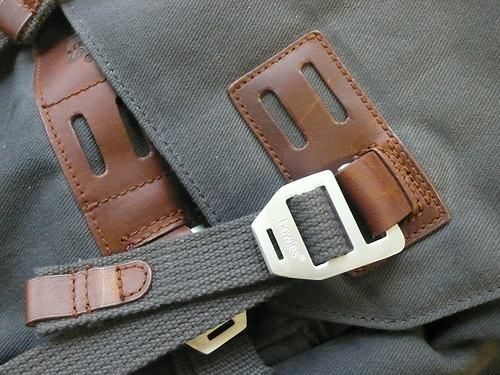
And I bought one of their backpacks and it arrived on Monday.

I've been a backpack junky for years. I must average about 3 a year. Looking for the perfect thing. Which is silly. So I'm going to stop and commit to this one bag. And I'm going to get rid of the others that are sitting under the stairs, in the garage, in storage at the moment.

100_1457-550x825(picture stolen from the Howies blog, hope that's OK)

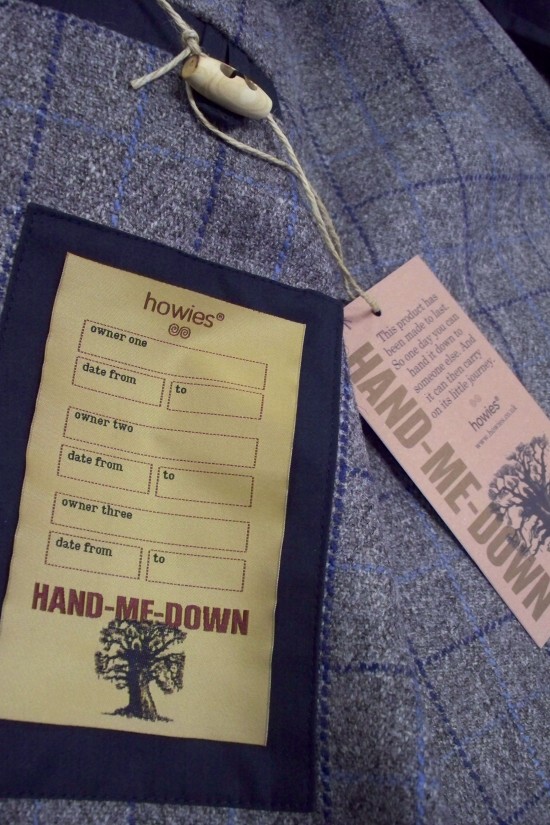
Now, of course, Howies are not the first to make high-quality stuff, nor the first to guarantee it for a long-time, many things are guaranteed for longer, but what I like is the ceremony and expectation they're wrapping around the Hand-Me-Down range. Like this certificate of ownership thing in the jacket. (Though there doesn't seem to be one with the bag, which is a shame. Howies - is there one and I've just missed it?) This kind of pre-experience design creates expectations around the ownership experience; turns it from a product to a project. And I like the way they've not just abdicated responsibility for their stuff once they've sold it to you. You get a sense that there's a conversation integrated into the product. (Ah-ha).

So I've been thinking about how I can continue to projectise this product. And how this bag can have a 10-year + story. So I'm trying to add spimeiness to it and to use internet stuff as a memory aid for this thing. So, I've created a unique URL for it at thinglink, in the spirit of the skuwiki idea. And I've built a tumblblog for it at HMDbag.tumblr.com. That tumblr extracts things from flickr and delicious that I've tagged appropriately, so it's sort of self-generating. I imagine telling the story of the life of the bag that way, keeping it as a project not a product.

But what would be really nice would be if it could tell its own story more. Generate its own data. I could attach an RFID tag, but I'm not quite sure what would ever read it. I guess ideally it would have it's own GPS logging stick sewn in. Or something. The good thing though, about a 10-year + project is that you don't have to have it all sorted at the begining. When GPS tracking chips are cheap, robust and powered by eating lint I can just chuck one on.

Anyway.

January 15, 2009 | Permalink | TrackBack (0)

meet the new schtick (2)

Hello again. This is a continuation of yesterday's write-up of a presentation I did on Monday. Make sense? Good. And on with the music.

Broken2  
I introduced this bit by saying I think this is the message the internet has for a lot of traditional media businesses. I was sort of joking and sort of not. But a little back story is required before we get there.

It's not news that the internet has stimulated all sorts of creativity in the real world. From communities and marketplaces of crafters like folksy to new forms of personal manufacture like shapeways; technology is giving regular people access to tools and markets that once they couldn't reach. And these aren't necessarily new tools or technologies. It's just that suddenly masses of people get to use them where once it was only large organisations that could. And the example I wanted to focus on was paper. (It was for The Guardian Media Group after all).

Tim O'Reilly has a great idea about the power of Watching The Alpha Geeks. And if you did that now, you'd notice that an interesting subset of alpha geeks are getting all excited about books and paper. You only have to look at BookCamp this weekend. And its attendant PaperCamp.

L1080724

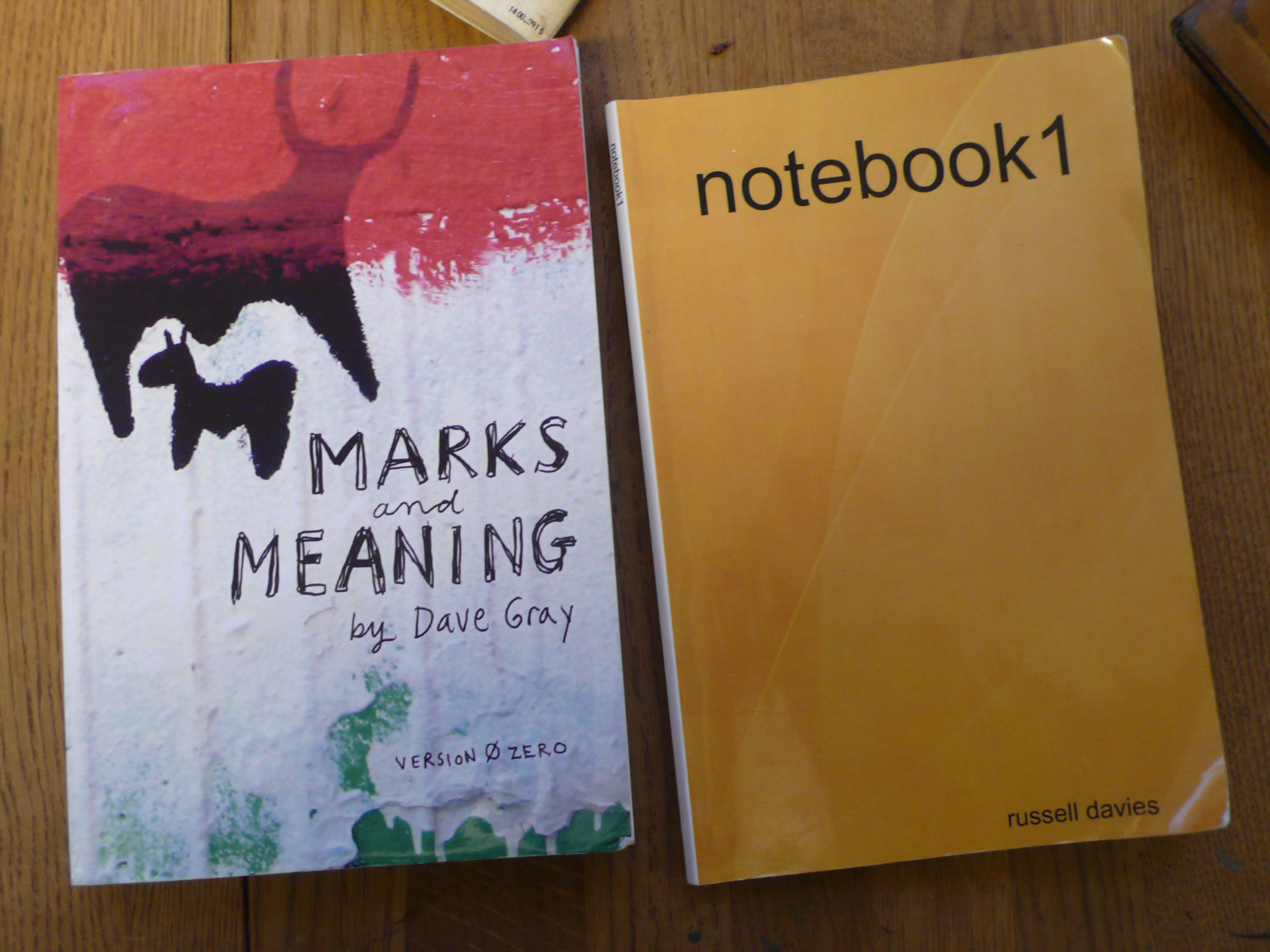
Two things got me really excited about all this stuff. (The first was hearing Aaron talk about The Papernet. But I didn't mention that.) The second was seeing Dave Gray's Marks and Meaning book. (Above on the left.) This is a book in Version Zero. It's unfinished. It's notes for a book.

Mr Gray was smart enough to realise two things; firstly that Lulu have made the mechanics of book-making so cheap and easy that you can move straight to the physical form of the thing as soon as you want. The best way to write a book is bundle all your notes and rough thoughts together and stick them in a book. Then carry that around, make amendments, even invite other people to do the same, until you fancy making another version. And one day, who knows there'll be a definitive 'finished' version. But maybe there never will be.

The second is that, in many ways, that's a more interesting and involving thing to own than a finished book. You're getting an object, but you're also getting into a little community.

He inspired me to make my own book (above on the right) cleverly entitled Notebook 1. I've always wondered how different notetaking styles might work for me so I've put them all together in one place so I can try it out. Grids. Shapes. Boxes. Lines. Plus I've added various things to do in case meetings get boring. Like a simple drawing of Pikachu so I can practise that, get good and impress Arthur.

You see what I'm getting at here? Books/paper are proven technologies. Brilliant things. Really good at all sorts of stuff. We're not in an age where books are about to disappear. But many of the business models associated with them may do. Because we're getting direct access to book technologies ourselves.

And closer to the newspaper world are these three things:

MagCloud is a way to make your own magazine. You upload a pdf. They print it. If you can get people to buy copies above a set base price you make money.

Tabbloid takes RSS feeds you select and turns them into a PDF that looks a bit like a tabloid newspaper. Which they email to you.

ViaPost will take electronic documents, print them out for you and post them for you.

These aren't connected things yet. (Though HP are involved in the first two.) They may well never be. But they point at all sorts of interesting infrastructural possibilities. A way that you can make beautiful print objects without any of the legacy business issues. Cheap and easily enough that you don't have to make money. Or you can find other ways of funding things. These seem like exciting possibilities.

Paper
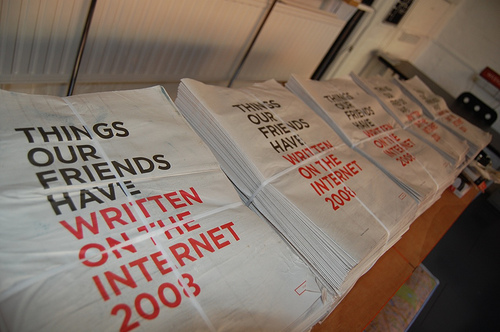
(Picture by Ben, from this set here)

I suppose it was a combination of thinking about all these things, plus finding out how cheap newspapers are to print, that led me and Ben to make this newspaper thing. It's exciting because putting it in the world has clearly made all sorts of people think again about the newspaper format. Cheap paper, cheap printing, can make something beautiful and interesting. It's a great form factor. Just because it's attached to struggling business models doesn't mean it will inevitably disappear.

So you add all these things together and you realise that there are all sorts of interesting possibilities around the corner. For community media projects, personal media projects, for the creativity that's running rampant online to emerge in physical forms in lots of places. Blah blah blah. You know what I mean.

And at that point I just sort of tailed off. I don't have a great conclusion yet.

But there's something in all this. Something worth thinking about. I think. Anyway.


January 14, 2009 in presentations | Permalink | TrackBack (0)

meet the new schtick

Blurry

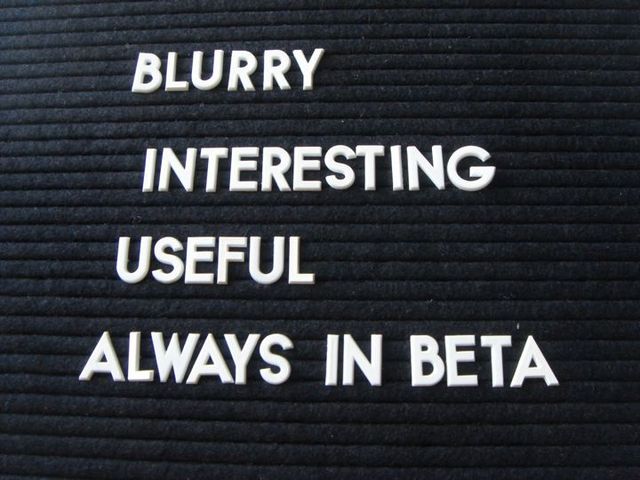
I did a presentation for a group of Guardian folk a couple of years ago. I wrote it up here. It was fun. And more importantly for me, it was useful, because I've been doing some variant of that presentation ever since. To the point I'd been starting to get really bored with hearing the same ad-libs. So I was rather pleased when they asked me back to talk again yesterday, and said, don't do any of that old stuff. Do some new stuff. I felt like Jerry Seinfeld going from this to this.

It wasn't great to be honest. It was OK. Got some laughs. Made some points. But wasn't as smooth as I'd have hoped. I need some time to get it working properly. But I thought writing it up on here might also help me improve it. Make me put it down in words rather than just slides and hand-waving.
Postdigital.key 

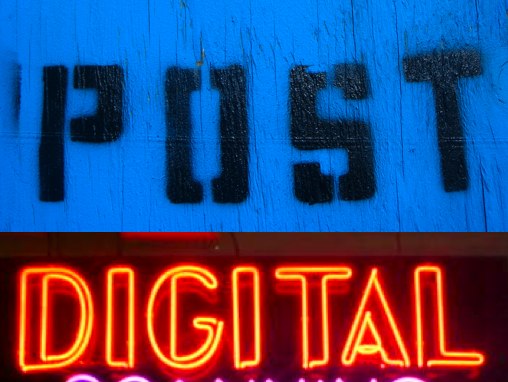
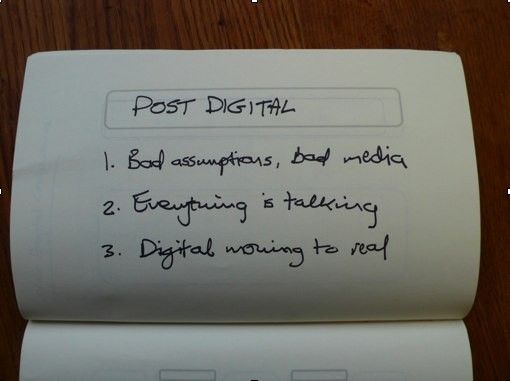
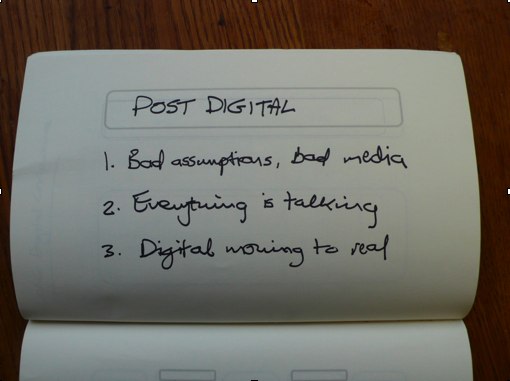
I guess my main thrust was about 'post-digital' thinking. Which sounds good doesn't it? What do I mean? Hmm. I mean a few things:

1. Screens are getting boring. It's really hard to impress anyone with stuff on a screen any more. However clever you've been. However much thought you've put in. However good the tech is. No-one's impressed. They've all seen better stuff in ads and movies anyway - when will onscreen stuff be as good as that? Whereas doing stuff in the real world still seems to delight and impress people. Really simple stuff with objects looks like magic. Really hard stuff with screens still just looks like media.

2. There are a lot of people around now who have thoroughly integrated 'digitalness' into their lives. To the extent that it makes as much sense to define them as digital as it does to define them as air-breathing. ie it's true but not useful or interesting.

3. The stuff that digital technologies have catalysed online and on screens is starting to migrate into the real world of objects. Ideas and possibilities to do with community, conversation, collaboration and creativity are turning out real things, real events, real places, real objects. I'm not saying that this means that these things are therefore inately better, or that the internet has 'come of age' or any of that nonsense. I just mean that there are new, interesting things going on IRL and that they have some advantages (and penalties) that don't apply online.

I'm not sure I really said any of that yesterday but it was what was in my head.
Postdigital2.key 

Given that 'Post Digital' idea, these were some things I thought it might be interesting to talk about.
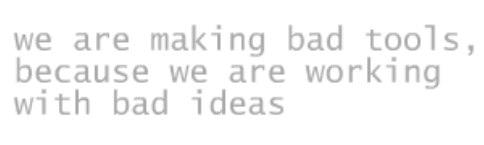
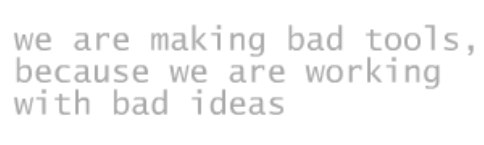
BadtoolsThe first one, I have to confess, was not wholly new. It was a truncated version of what I said at Design Engaged and Widgety Goodness. Mostly bits of this, this, this, this and this. My basic point was that the assumptions about how advertising works we're baking into our media tools are wrong. And so we're making bad media tools. Things that will piss people off. I think that's largely because while Google and the rest of the clickonit scientists were relentlessly implementing a mechanistic, message and relevance based model of how advertising works the thoughtful bits of the advertising business (admittedly not large in number) had their head in the sand denying the existence of anything digital.

I do want to revisit this stuff, and it's implications, especially in the light of Julian's brilliant stuff here, but I won't do so right now.
Things 

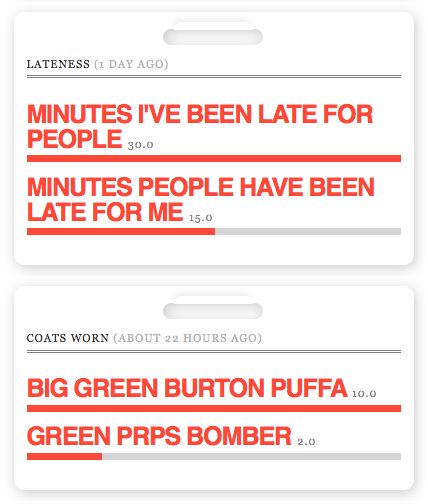
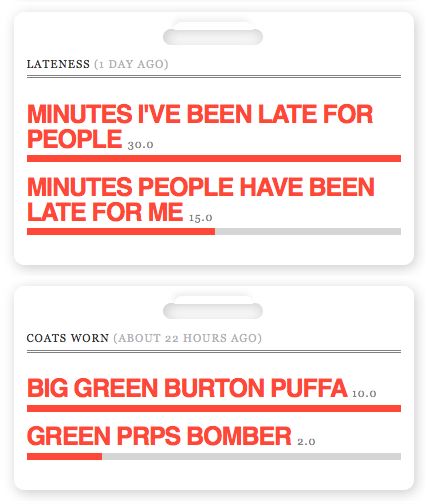
So, by now, we're all very comfortable with people's desire to share all sorts of stuff about themselves. Data is/are streaming out of us into the world. For instance, these are two significant bits of 2009 data are available on my daytum page: (no, I don't have any invites I'm afraid, I stuck my email address in and a beta invite arrived some time later.)
Daytum

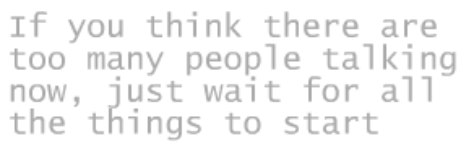
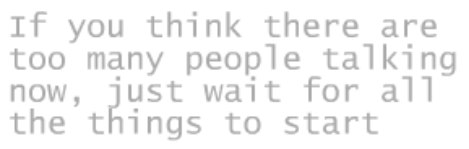
And we're all familiar with the oft-cited examples of products with datastreams. Nike+. Fiat Ecodrive. Wattson etc. And we're seeing the emergence of twitter as a brilliant communication channel for objects. From MarsPhoenix, to TowerBridge to the shipping forecast.
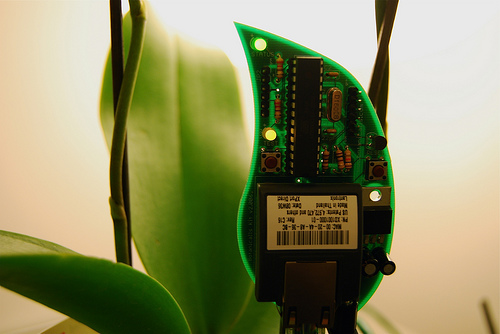
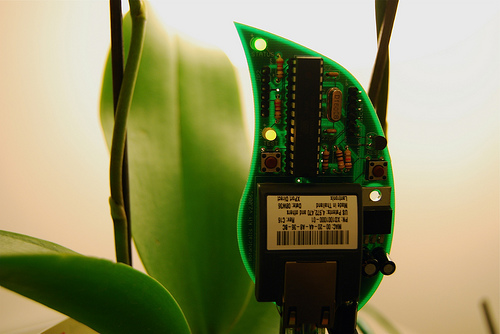
Botanicalls(Gorgeous botanicalls picture by Matt, from this set on flickr.)

And now, of course, people are finding ways to make more things informationally connected, via botanicalls or pachube or what have you.

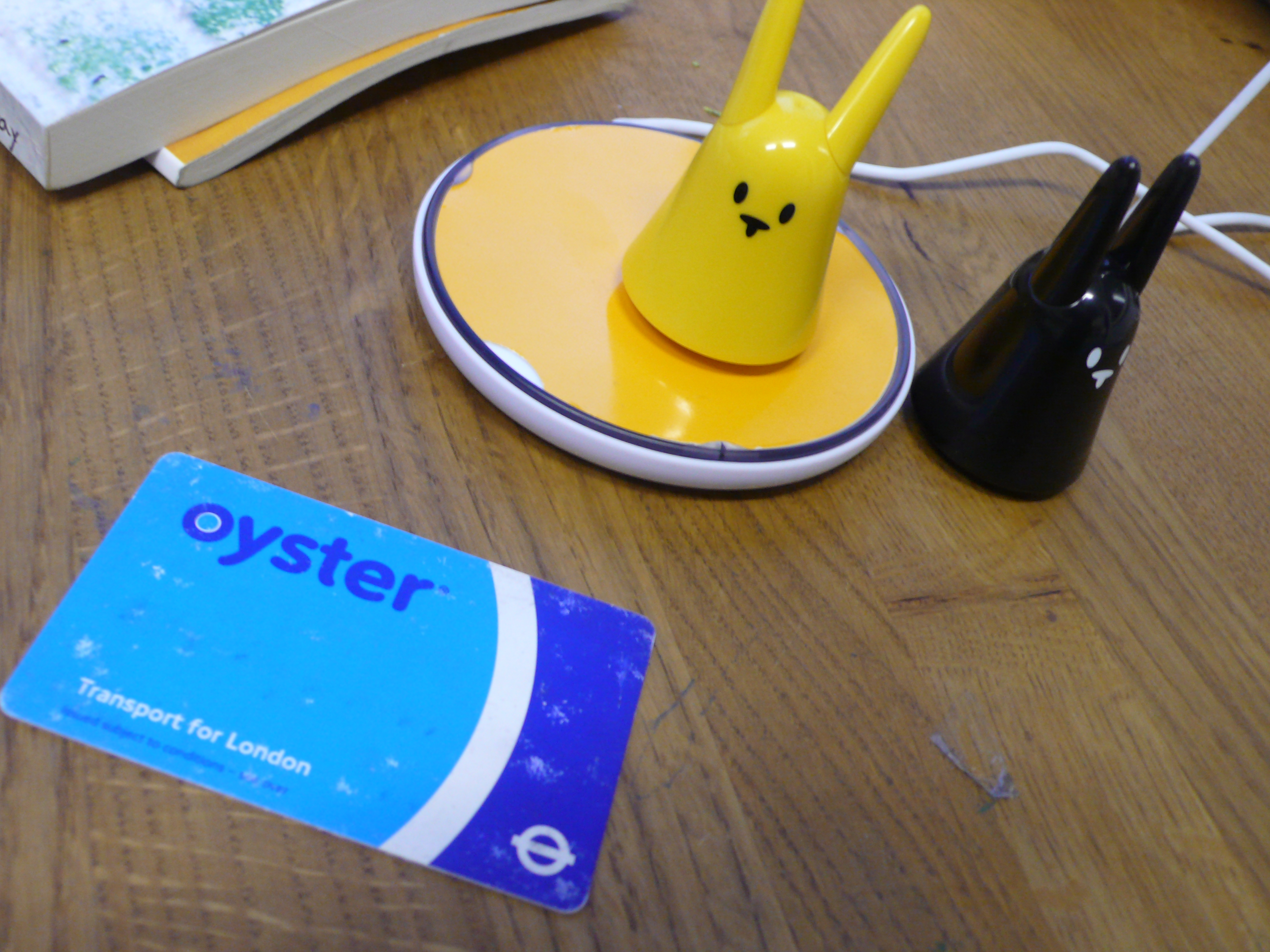
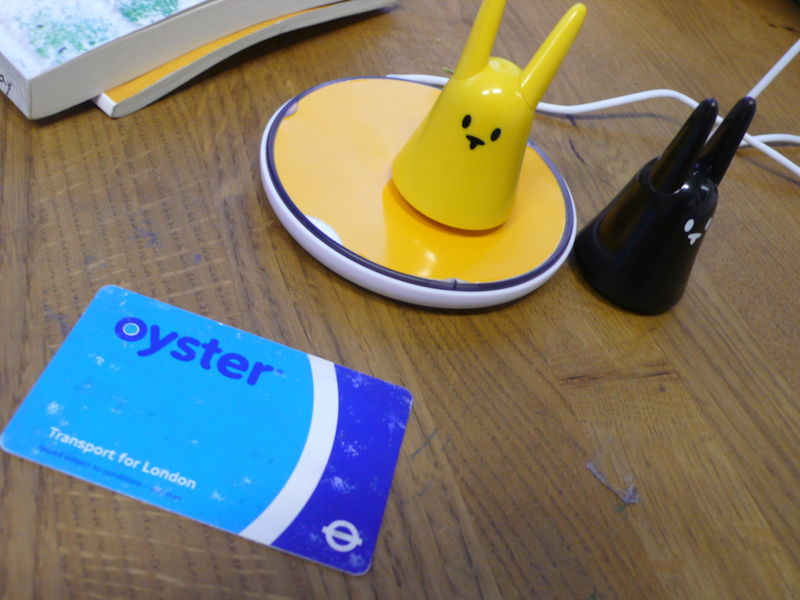
Or, indeed via RFID. And having spent a few days mucking about with tikitags and the violet mir:ror and ztamps I thought I'd chance it and have a go at demoing how relatively simple technology can delight us so by operating in/via the real world. It's a bit scary doing demos that involve wifi at conferences. Especially with French technology. But it seemed to work OK.
L1080725

I showed how sticking these two little rabbit fellas on the reader thing could make things happen: like playing the This American Life podcast, or reading the Guardian Unlimited RSS feed out in a strange voice.
L1080722 

L1080723

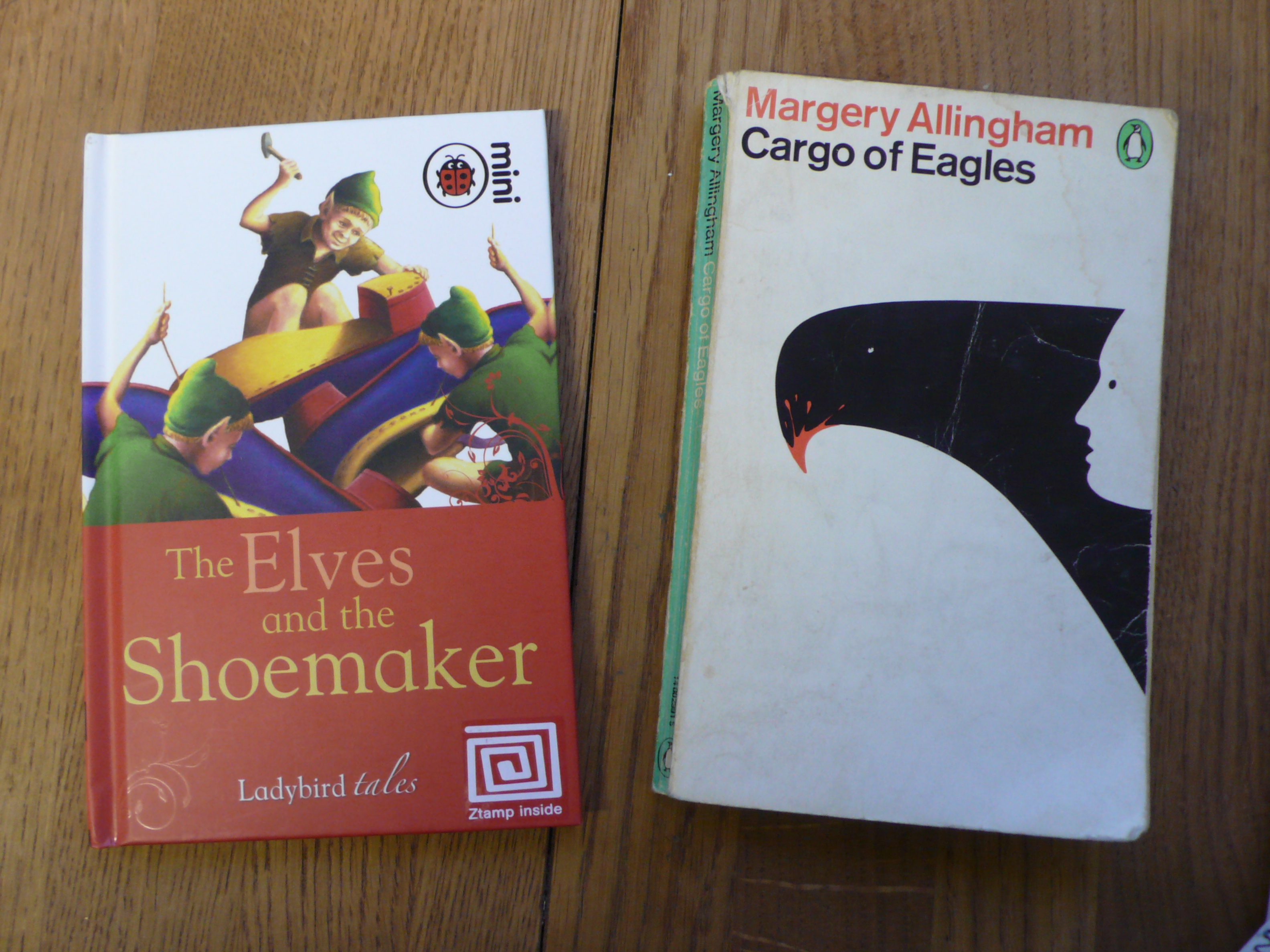
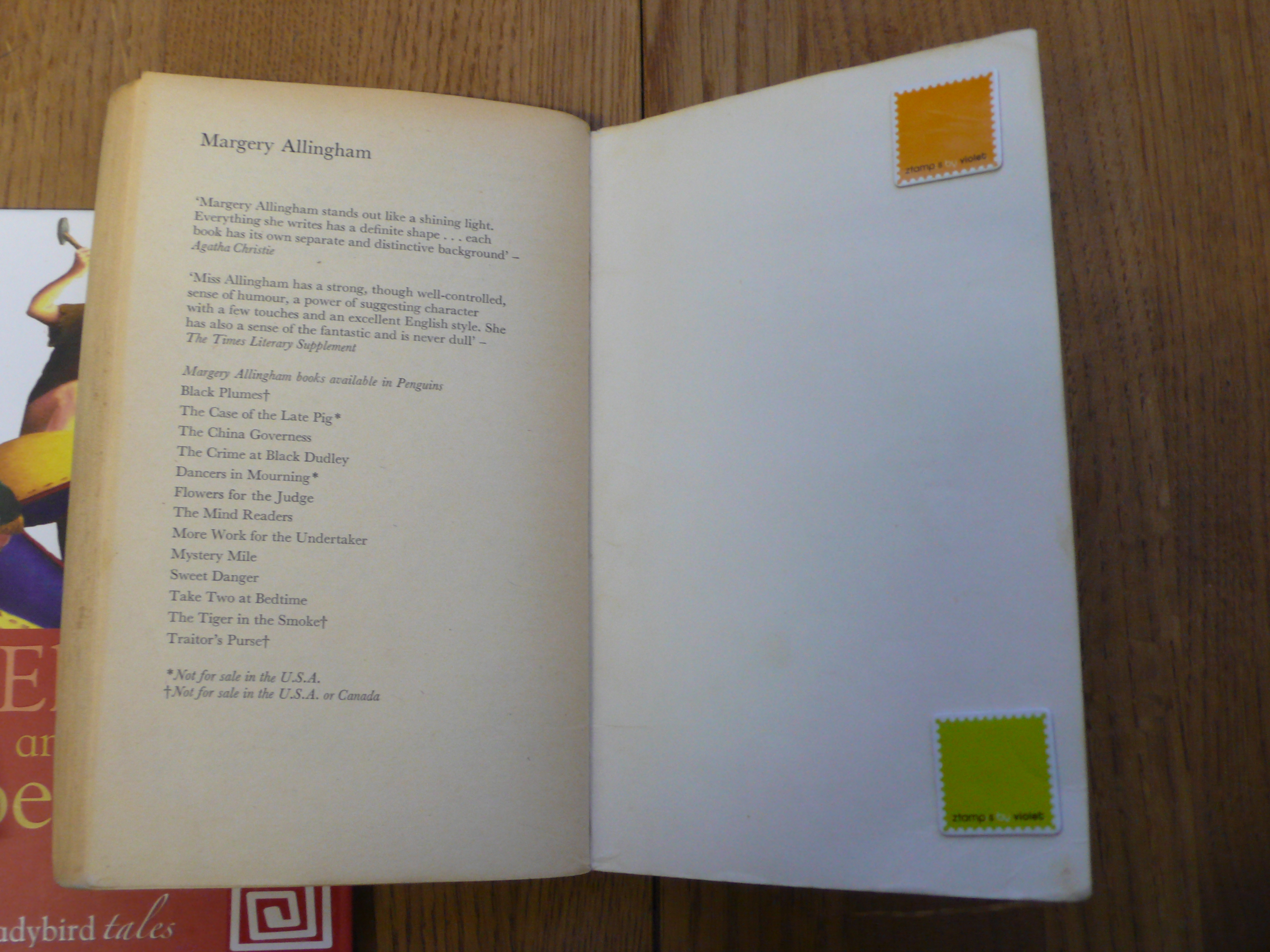
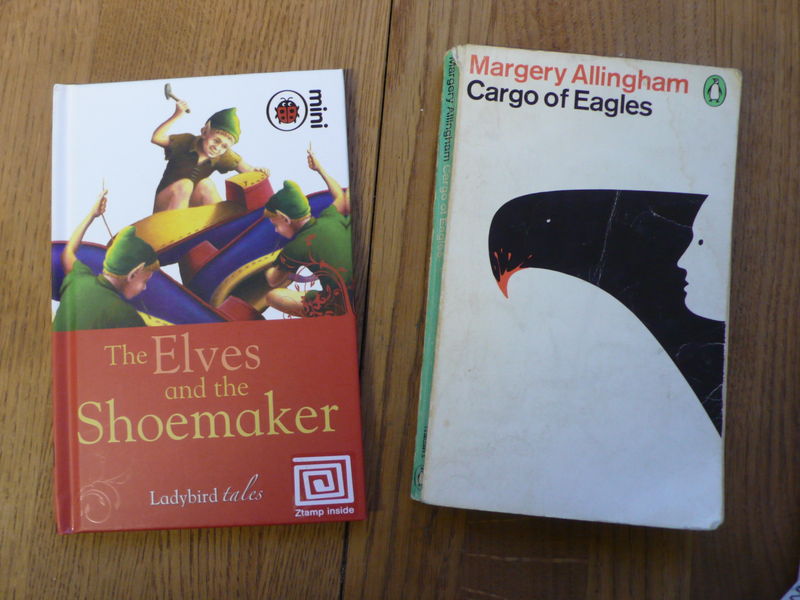
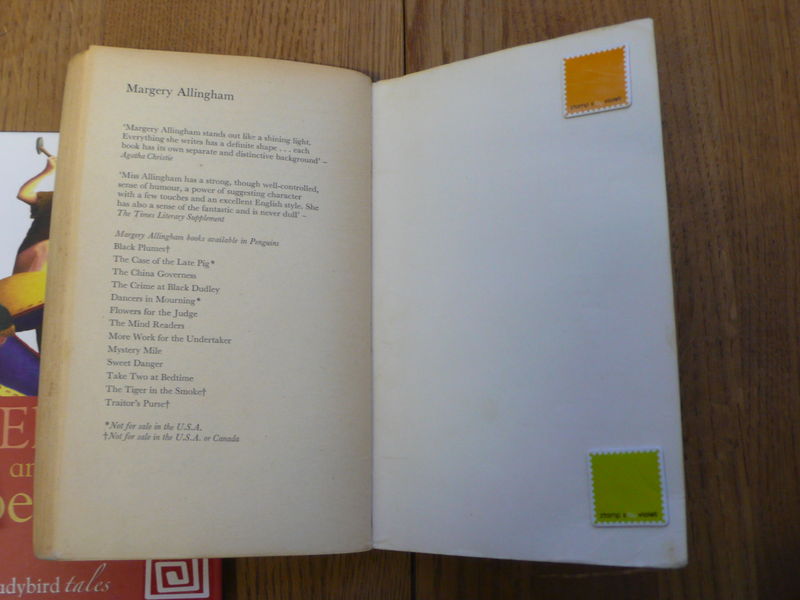
Or how if you stick this copy of the Elves And The Shoemaker on the reader a charmingly BBC voice will read the book for you. I showed the little modifications I'd made to Cargo Of Eagles - using the RFID tags I'd stuck in the back to trigger a specific iTunes playlist as a soundtrack for listening to the book. And I also showed Boffswana's Augmented Reality working, which was touch and go to with the low-light.

Now I know these aren't leading edge techologies or anything. They're not indistinguishable from magic. But they're sort of delightful and they're very distinguishable from another boring microsite.

The point I'm groping towards is that as objects informationalise communication channels are getting built in. And there are ways of doing this that are mass, cheap and easy. Printing. Paper. Ink. RFID. And cleverer phones will be the perfect things to interact with these clever objects. This is what advertising and marketing and media people really need to get afeared by. All this web stuff is going to look like a picnic compared to the horrors that will be dealt to the agency and media businesses when every product has a communications channel built right in. And I suspect it's a channel that most brand-owners will feel a lot more comfortable with. Marketing/advertising was always a necessary evil for most businesses. And  Something bolted onto the culture. And they've never liked ITV. And having to do all this social networking stuff gives most of them the willies. But integrating communication and information into the product is something they can get behind quickly and easily.

I think. I'm not quite sure where I'm going with this but I think it's interesting. I think there's a whole model here that integrates the conversation into the stuff, creating a much more natural relationship between people and things, with much less mediation in the middle.

Anyway. We're all bored with this now. I'll finish it tomorrow when I'll get round to the last bit of the presentation and the EXCITEMENT of PAPER.
January 13, 2009 | Permalink | TrackBack (0)

king's cross

IMG_0006

January 13, 2009 in diary | Permalink | TrackBack (0)

test

3191716153_f6a14ea1f0

Don't mind me. I'm just testing the new typepad compose editor thingy. Why do people have to improve stuff all the time?

January 13, 2009 | Permalink | TrackBack (0)

bionic listening

L1080697

One of the things you discover when you first get your hands on musical equipment is how great echo sounds. You slather on bags of the stuff and listen to the repeats and building and feedback doing extraordinary things to the source sound. Then, normally, you go one of two ways, you either learn restraint and subtlety and dial it all back or you don't and become a sound artist. But, it's still true, there's something really primal about the sounds of echo and related phenomenon. Something that really gets you.

Which might be why RJDJ works so well. It's a programme for the iPhone that takes in the sounds that surround you and plays them back to you; treated and altered in all sorts of ways. Including bags of echo. I took RJDJ for a couple of trips the other day and really enjoyed the effects of it.

This first one is a tube trip from Great Portland Street to Southwark, about 7pm on a Thursday evening. MP3 here. Some of it is just your average environmental sounds, tweaked a bit, nice, but unremarkable in any sound installation. But there are regular moments of some loveliness; like the melodic stuff that emerges about 5 minutes and 10 seconds in.

Or, this is a walk from the SouthBank to Carburton Street later on that same night. (MP3) There seem to be less of the environmental sounds in this - the music seems to be derived from the rhythm and bulk of what I was walking through. So there are intense bits that represent walking down Oxford Circus and quiet rhythmic bits towards the end as I got away from the crowds and traffic. And there's a slightly startling moment at 20:48 where a bloke who wasn't looking where we going steps into me and lets out a yell.

I think they're pretty listenable as ambient soundscapes, alright for working to, but where RJDJ really impresses is as a noticing tool. The way it plays your environment back at you, altered and treated, really makes you aware of the soundscapes you're walking through. You listen harder, notice more. It's the same effect as looking through a lens or a distorting mirror. And, as with a camera, if you're recording it, you look/hear harder.

It's well worth a try, I've only tried two scenes so far and I really liked them. It's good. (PS if the sounds quality isn't great it's because I had to record it via the headphone jack on my phone and Audio Hijack on m'computer.)

January 11, 2009 in audio | Permalink | TrackBack (0)

new year in lyddle end

Fabricator_tuck_lyddle

Here's some Lyddle End 2050 news for all you speculative modellers. To start with, more people have already finished. Max has just emailled me a shot of the Tuck Shop Fabricator and this splendid blurb:

In 2050, the permanent and nomadic residents of Lyddle End use the community Fabricator to build whatever they need. They do their paperwork and receive legal advice in the Tuck Shop, the owner of which can deliver a very personal service. (people still like to go to the shops.)

Nanotech/ Biotech agreements between Asia and Europe mean that creation at the atomic level is now possible. This photo shows the local butcher building a pig. (Those that eat meat still like to have it cut from something previously sentient, rather than the petri-pork that has replaced tofu.)

This is an early model fabricator. It needs to assemble from other matter. Absorbtion rods at the back suck C02 from the air  (cleaning the planet) for raw material and re-sculpt this matter on the fab-deck. Other 'fabs' resculpt landfill or rock - but recycling the Earth's mess is obviously the priority.There are no Home fabricators (legally) - the act of creation cannot yet happen in a small or enclosed space.

Each community fabricator is named after the first thing made. This one is called Dodo.

Alan's also done an incredible milk-producing cow tree to sit along side his cottage. And there are people thinking and planning in Photoshop, really interesting, thoughtful stuff. You can keep up with all the developments at the Tumblr thing.

Which of course will be frustrating for those of you who haven't even got your models yet. I'm fully seized of the need to address this and am on the case. Lauren is very kindly sorting out models for those in Australia and I've found an online shop that will do North America for me. And I'll get some envelopes for everyone else. Or, of course, you could get your own.

January 06, 2009 in slow projects | Permalink | TrackBack (0)

fat apps

Dsc01824

We got a Wii Fit a while ago. It weighed us, asked us some questions and redrew our Miis. This is me. It was rather alarming. I think those of us who don't like looking at our own bodies develop great skills in avoiding them. We glance away from flickr or hide behind our hands. But something cartoony like this confronts us with how we probably look to the world.

My only successful effort at fitness ever was, not surprisingly, while I was working at Nike. It involved lots of nike+ing and only eating bacon. But I've put on 2 stone since then, so action needs to be taken. One thing I know about myself is that I work well with measurement, boxes that need ticking and new gadgets so I'm pinning some hope on continuing with the nike+, and adding these two:

Gymfucom_serious_fitness_minigames

Weightbot_tapbots1

They are PushupFu and Weightbot, apps for the iPod/iPhone. These things feel like the future to me. They're both brilliantly designed, focused and simple but with enough complexity to be interesting. They're not stripped back and minimal, they do a simple thing but they do it with oomph. There's fun in the details. You might call it playful utility. Splendid things.

And, I'll be tracking myself at daytum because a bit of semi-public display of failure is always motivating. But I'd love to go further than that, I'd love to a personal version of this, a page where I can stick all the daytum panels, and the nike+ widget, and other bits and bobs, and it would just make it look nice. Does that exist?

Anyway.

January 06, 2009 in stuff | Permalink | TrackBack (0)

right size

L1080619_2

Some formats are just the perfect, appealing size. Like paper espresso cups. They're just a lovely size. I might collect them. They always remind me of minidiscs. Minidisc was a great format - the right size, weight and feel for a slab of music. Shame they aren't more use for something now. There must be something good you could do with minidiscs.

January 05, 2009 in things | Permalink | TrackBack (0)

holy

3156256955_15e1790670_o

Matt has inspired me (and others) to consider my 2008 listening as recorded by last.fm. It reminded me how much I'd enjoyed Holy Fuck last year. And you can listen to lots of it here, should you wish.

January 04, 2009 in diary | Permalink | TrackBack (0)

« Previous | Next »